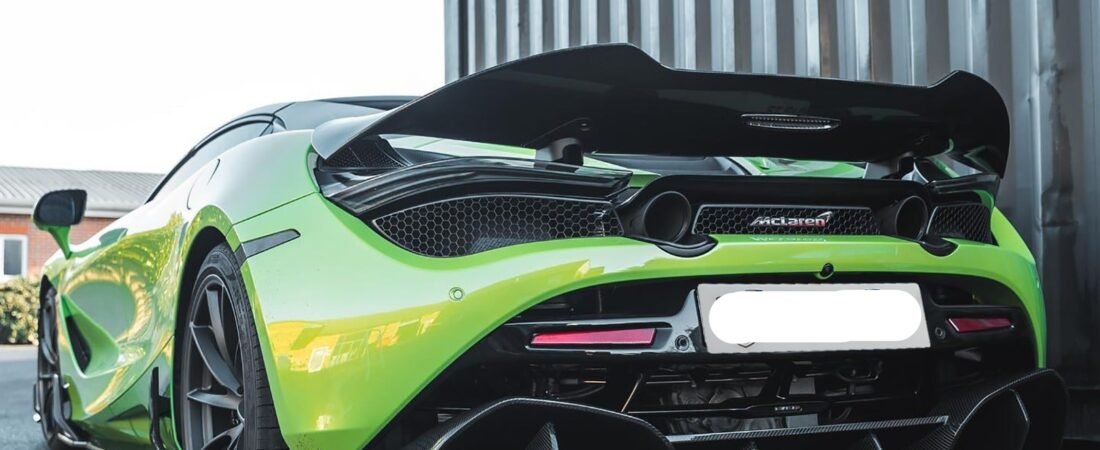
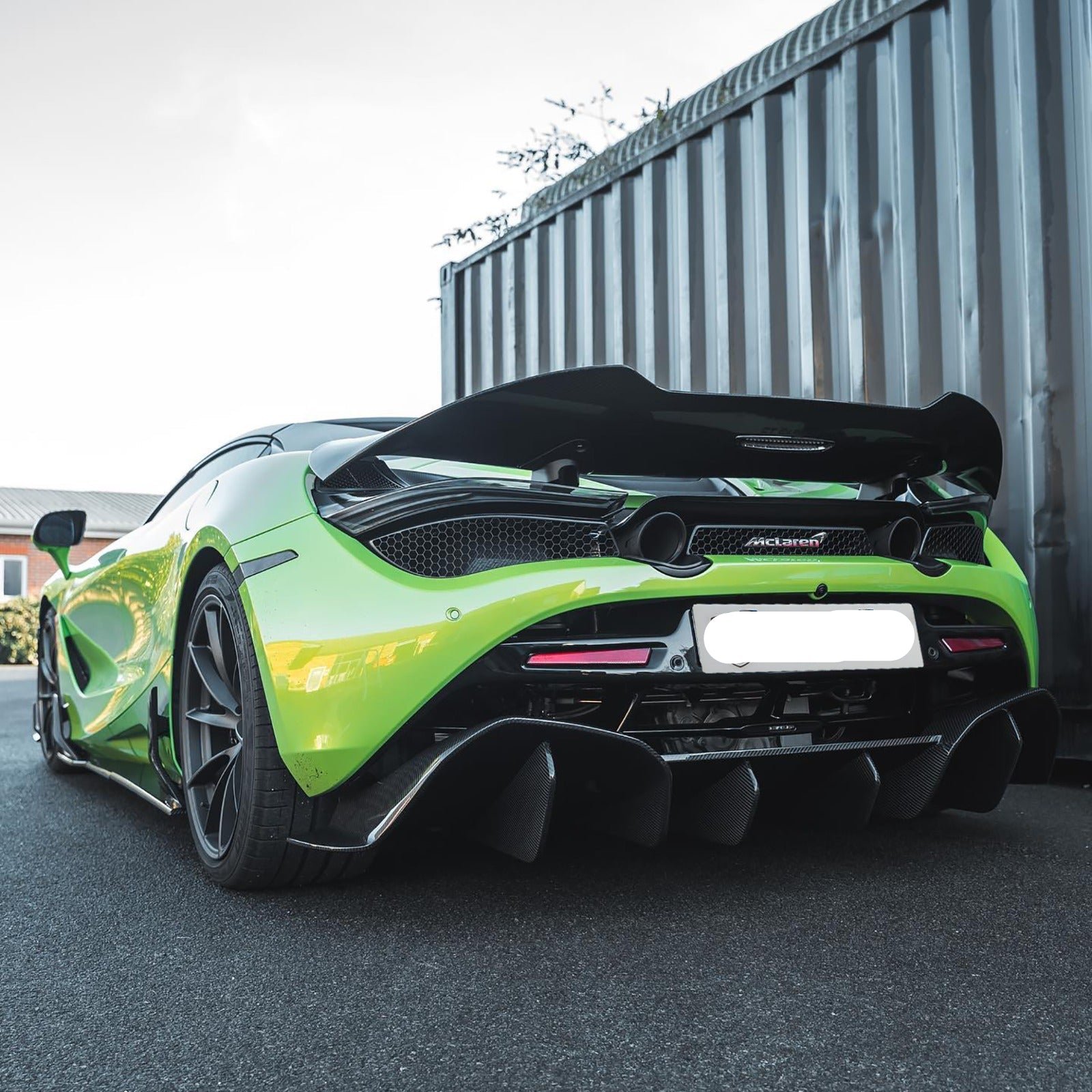
A carbon fiber rear diffuser can give your car a sharper rear profile, but the wrong one can leave you paying twice: once for the part, and again for bumper repairs, exhaust changes or a replacement that actually fits. The most expensive mistake often starts with a listing that says “fits your model” without showing the bumper version.
This guide explains seven buying mistakes to avoid, with real installed-car photographs from the RevexaAuto product catalog. You will learn what a rear diffuser does, which details determine fitment, and how to compare the complete installed cost before placing an order.
The quick buying checklist
Before ordering, confirm the exact bumper, exhaust layout, mounting method, material construction and return terms. Ask for photographs of the same vehicle version, including the underside and mounting points. Choose by the evidence available for your application, then by the appearance you prefer.
What does a rear diffuser actually do?
In an engineered aerodynamic system, a rear diffuser is the expanding section near the back of the underbody. Its shape helps manage the airflow leaving the floor. The result depends on the surrounding underbody, ground clearance and vehicle geometry.
Many street-car products sold as diffusers are primarily replacement bumper inserts or decorative lower extensions. They can provide the exposed-carbon appearance you want without having demonstrated a measurable handling improvement. A carbon weave and tall fins alone do not prove downforce.
For a factory example, Porsche’s 911 GT3 RS technical overview describes the rear diffuser alongside the splitter, wing and other airflow features. That is a useful reminder to assess aerodynamics as a complete vehicle system rather than transfer a factory car’s results to an aftermarket insert.
7 costly carbon fiber rear diffuser mistakes to avoid
1. Matching the car name but overlooking the bumper
The make and model are only the beginning. Standard, sport-package and performance bumpers can have different lower contours, clips and exhaust openings. A facelift may change the insert even when the badge stays the same.
This matters when shopping for a Lexus IS250, IS300 or IS350 carbon fiber rear diffuser: a broad list of model names does not establish that one part fits every generation and trim. Compare the exact year, body style, bumper package and existing lower insert. If the bumper has been replaced, tell the supplier what is on the car now.
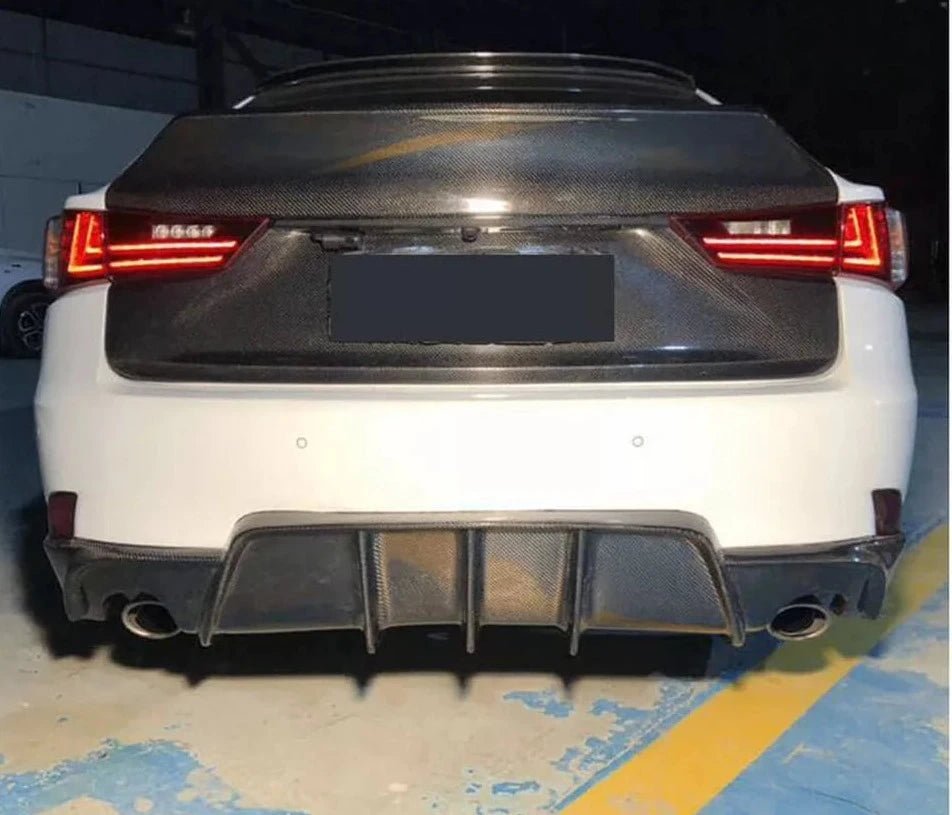
Ask before buying: “Does this fit my current bumper without conversion? Here are my model year, trim and rear-bumper photos.” Request a rear view and side view from the same application, rather than accept a photo of a similar vehicle.
Start with the RevexaAuto rear diffuser collection and narrow the application before comparing styles. A part described for a particular chassis still needs confirmation against your bumper.
2. Assuming the exhaust openings will line up
A diffuser may fit the bumper and still conflict with the exhaust. Check the number of tips, their outer dimensions, spacing, height and projection. Aftermarket silencers and larger tips can change the clearance on a car that otherwise matches the listing.
BMW provides a concrete example in its M2 M Performance Parts overview: the central four-tailpipe exhaust arrangement is paired with a specially modified carbon-fiber diffuser. The pairing illustrates why exhaust and diffuser specifications should be reviewed together.
Ask the supplier or installer to specify the required clearance for the actual part and exhaust system. There is no single safe gap to apply to every resin, coating and exhaust design. Avoid a setup that requires the carbon edge to touch a tip, and do not assume trimming a new diffuser is an acceptable solution.

If you are changing tips at the same time, read our carbon fiber exhaust tips fitment guide and send both specifications with your inquiry.
3. Paying for “carbon” without knowing the construction
“Carbon fiber diffuser” may describe a full carbon laminate, a real-carbon outer layer over another composite, or a plastic part with a printed carbon-look finish. These are different products and should be described clearly.
Ask for the material specification and photographs of the back, edges and mounting areas. The visible weave can help you inspect workmanship, but a front-facing photo cannot establish the entire laminate construction. A gloss finish does not mean wet layup; a matte finish does not mean prepreg.
Hexcel’s prepreg and resin information explains prepreg as reinforcement combined with a resin matrix. For a buyer, that means “prepreg” describes material and processing, not the sheen of the clear coat. Ask how the particular diffuser is manufactured rather than rely on “dry carbon” as a complete specification.
For more appearance checks, use our real carbon fiber identification guide. Neither a material label nor a high price proves that the hidden mounting tabs will fit.
4. Treating tall fins as proof of downforce
Tall fins create a dramatic look. Their height alone does not tell you how the part behaves in the airflow under your car.
A computational diffuser study by Buscariolo, Assi and Sherwin found different airflow and loading behavior as diffuser geometry changed on simplified vehicle bodies. Those findings support the need for geometry-specific evaluation; they are not a recipe for choosing a universal angle for your road car.
If the seller claims a performance improvement, ask what vehicle was tested, at what ride height and speed, and whether the result came from simulation, wind-tunnel work or track measurement. A SAE paper on diffuser design with CFD and track-test correlation illustrates the kind of development evidence relevant to performance claims.
For a daily driver, choosing a diffuser for appearance is reasonable. Keep that decision separate from an unverified promise of more grip. For a track build, discuss the floor, splitter, wing and aero balance with the team developing the car.
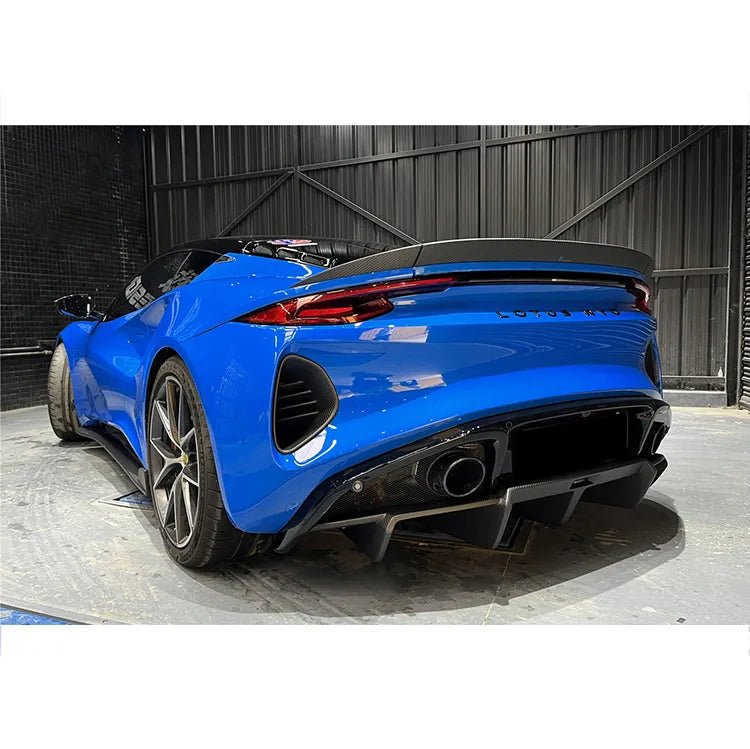
5. Discovering the mounting method after delivery
A replacement insert, an overlay and an underbody extension can require different installation work. Confirm which factory component is removed, whether the bumper must come off, and which clips, screws, brackets or backing pieces are supplied.
Request an underside photograph and installation instructions before ordering. Look for cleanly formed tabs, finished edges and mounting locations that correspond to the original bumper. Do not force a rigid carbon part into place with fasteners to hide a mismatch.
If the specified design uses tape or adhesive, follow the product and adhesive manufacturer’s instructions. 3M’s tape application guidance covers surface preparation and application pressure. It does not establish that tape alone is suitable for your diffuser: the mounting design still determines whether mechanical retention is required.
Workshop rule: dry-fit the part and photograph the gaps before drilling, bonding or modifying it. Confirm return conditions first, because installation marks can change whether the supplier will accept a return.
6. Ignoring daily-use clearance and equipment
A deeper diffuser can reduce practical clearance when leaving a steep driveway or loading the car. Check the lowest fin, rear overhang and suspension setup. Photos taken on a flat workshop floor cannot show how the same car will behave on your driveway.
Review access to towing points, factory reflectors and any equipment near the lower bumper. Ask whether the design retains the original undertray and whether it affects a hands-free tailgate sensor, if fitted. For products with an added LED, request a separate wiring and installation specification rather than assume the light plugs into every car.
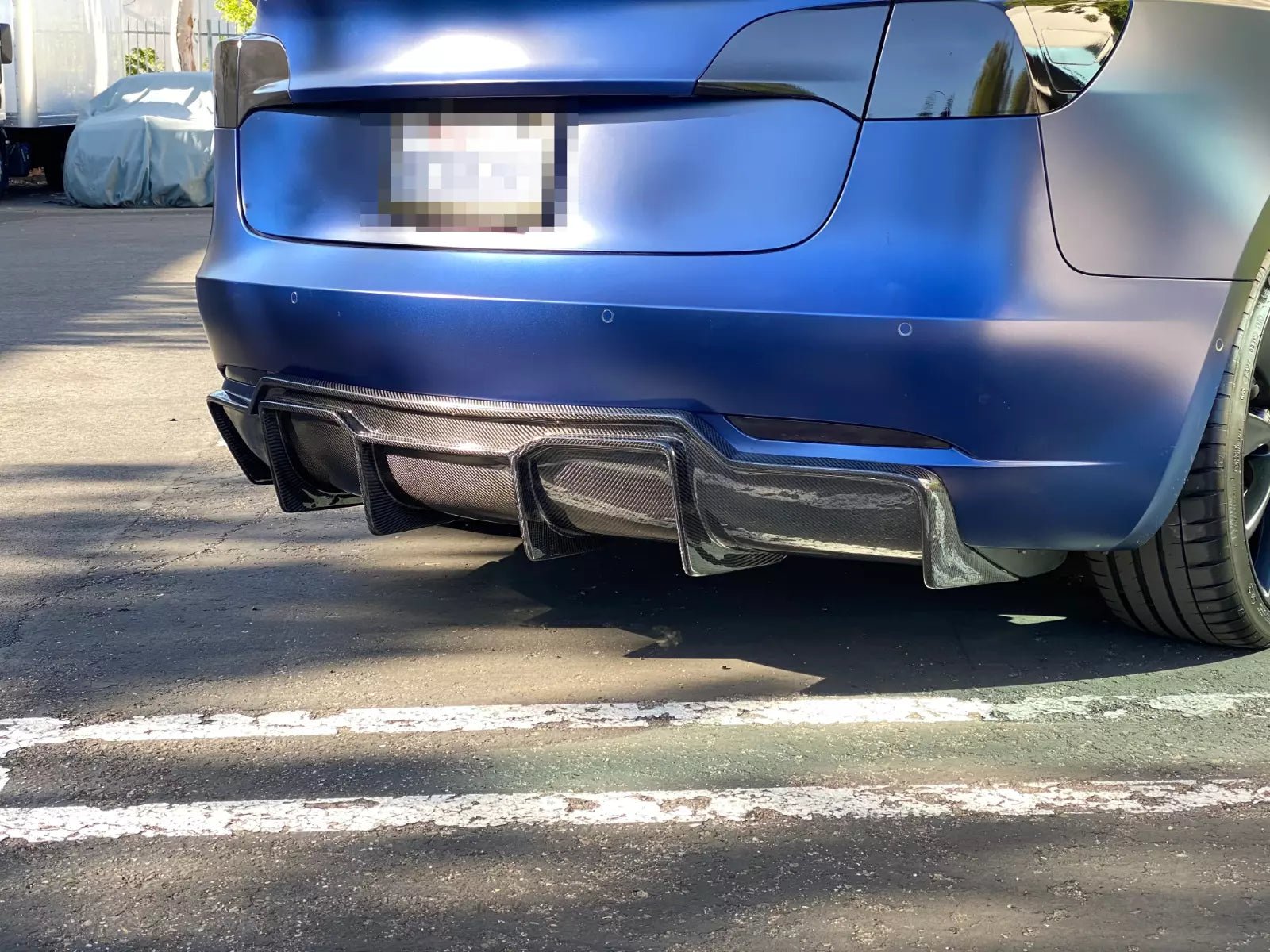
Electric cars avoid exhaust-tip fitment questions, but they still require exact bumper matching, secure mounting and clearance checks. Confirm the generation and bumper configuration for a Tesla Model 3 rather than treating all Model 3 rear diffusers as interchangeable.
7. Comparing the part price instead of the installed total
The lowest listing price may exclude hardware, protective shipping, import charges or the labor needed to remove a bumper. A cheaper insert that requires an exhaust change can cost more overall than a correctly matched part.
Compare quotes using the same scope: diffuser, mounting kit, shipping destination, installation needs and finish. Get written confirmation of what happens if the delivered part does not match the verified application. For overseas orders, ask how the long edges and projecting fins will be protected during transport.
Retailers and workshops should approve a sample for a specific application before treating a supplier’s catalog compatibility list as evidence for a larger order. Record the application, part reference, approved finish and installation photos so repeat orders can be checked against the same specification.
Carbon fiber vs ABS vs carbon-look: which should you buy?
| Construction | Why choose it? | What to confirm |
|---|---|---|
| Real carbon-fiber laminate | Exposed-carbon appearance and a material choice suited to the specified design | Laminate, manufacturing process, finished weight, mounting reinforcement and coating |
| Real carbon outer layer over a composite base | Real-carbon surface with a different underlying construction | Base material, complete weight and accurate product description |
| ABS or other molded plastic | Often suitable for a painted or gloss-black street styling upgrade | Exact material, surface finish, molded clips and bumper compatibility |
| Carbon-look finish | The visual pattern when real carbon is not a priority | Whether the pattern is printed, wrapped or hydro-dipped, and how it is protected |
Choose the construction that suits your goal and budget. Compare finished parts rather than assume every carbon product is lighter, stronger or better fitting than every plastic alternative. For larger builds, our carbon fiber body kits guide covers matching multiple exterior components.
How much does a carbon fiber rear diffuser cost to install?
There is no useful universal price for every vehicle. A small bumper insert and a larger replacement assembly are different jobs, and labor varies with bumper removal, hardware access and associated exhaust work.
Use this comparison: complete cost = part + mounting hardware + delivery + applicable import charges + fitting labor + any required related work. Ask a workshop to quote the exact design and mounting procedure before committing to the part.
- Does the quote include every bracket and clip?
- Is bumper removal included in the labor estimate?
- Does the original exhaust remain in place?
- Who pays return shipping if the verified fitment is wrong?
- Can you inspect and dry-fit the part before permanent installation?
Frequently asked questions
Is a carbon fiber rear diffuser worth it for a daily driver?
It can be if you value the appearance and have confirmed fitment, mounting and clearance. Treat measurable aerodynamic improvement as a separate claim that needs evidence for your vehicle.
Does a rear diffuser make the car faster?
A tested diffuser may contribute to an aerodynamic package, but an aftermarket bumper insert does not automatically improve speed or grip. Geometry, underbody airflow and the rest of the car matter.
Can I install a rear diffuser without drilling?
Some designs reuse factory mounting points; others require new holes or additional brackets. Ask for the instructions for the exact part. Do not replace specified fasteners with tape simply to avoid drilling.
Is dry carbon always better than wet carbon?
The manufacturing process can affect weight and laminate quality, but neither term guarantees bumper fitment or mounting strength. Ask for the actual construction, finished weight and fitment evidence.
How should I care for exposed carbon?
Follow the coating supplier’s cleaning guidance, avoid abrasive polishing without checking compatibility, and inspect the mounting points and fins after an impact. Chipped coating and cracks need assessment rather than being hidden with a cosmetic treatment.
Send these details before ordering
A precise fitment request makes it easier to identify the right carbon fiber rear diffuser. Copy the checklist below into your inquiry:
- Make, model, model year and chassis generation
- Body style and bumper package, including any aftermarket bumper
- Clear rear and side photographs of the current lower bumper
- Factory or aftermarket exhaust details and tip dimensions, where applicable
- Preferred style, weave and gloss or matte finish
- Delivery country and quantity
- Whether you want a replacement insert, an overlay or an underbody extension
Request a diffuser fitment review, or browse rear diffuser applications to choose the style you want checked. Confirm compatibility before paying for a part that only looks right in the listing.