The choice between carbon fiber vs fiberglass car parts is not simply “premium” versus “budget.” Both are fiber-reinforced composites, and either material can produce a useful automotive panel when the laminate, tooling, resin, reinforcement and fitment are appropriate. Carbon fiber is commonly chosen for lower mass, higher stiffness and exposed weave. Fiberglass is often selected for lower cost, easier refinishing and practical repair.
Carbon fiber vs fiberglass: the quick answer
Choose carbon fiber when low mass, stiffness and a visible carbon finish justify the higher cost. Choose fiberglass when budget, paintability and easier body-shop repair are more important. For either material, a correctly designed, well-fitted part is better than a poorly manufactured panel made from a more expensive fiber.
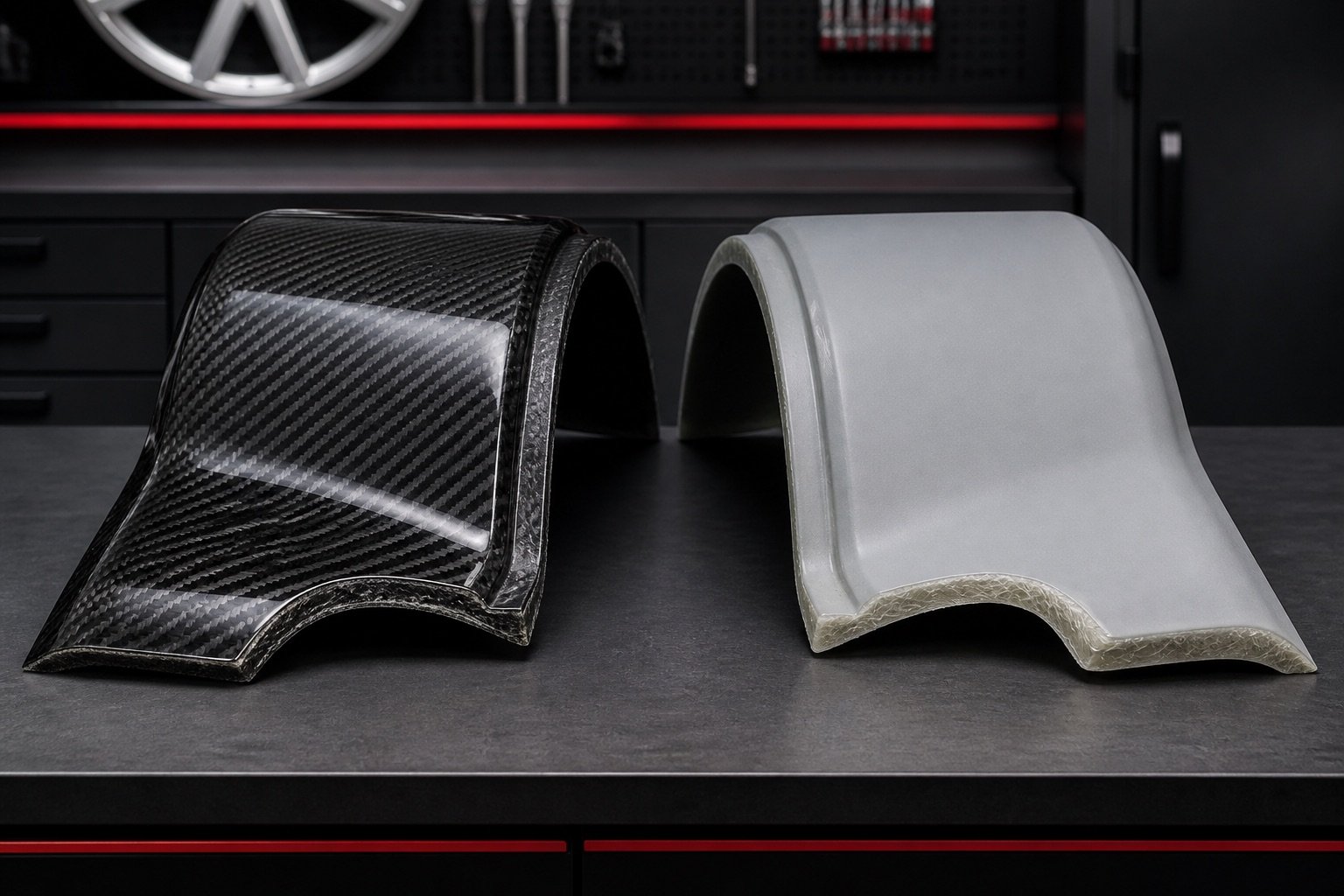
Carbon fiber and fiberglass at a glance
| Factor | Carbon fiber composite | Fiberglass composite |
|---|---|---|
| Mass potential | Can achieve high stiffness at lower mass when engineered correctly | Usually requires more material for comparable stiffness |
| Surface finish | Often left exposed with gloss or matte clearcoat | Usually primed and painted |
| Cost | Higher material, process and quality-control cost | Generally more economical |
| Impact behavior | Stiff but damage can be localized or hidden within the laminate | Often more visibly flexible; cracks and delamination still require inspection |
| Repair | Specialist repair is recommended, especially for visible weave | Many body shops are familiar with fiberglass repair and refinishing |
| Best-known use | Lightweight panels, aero parts and exposed-carbon styling | Painted body kits, prototypes and cost-sensitive panels |
How the materials differ
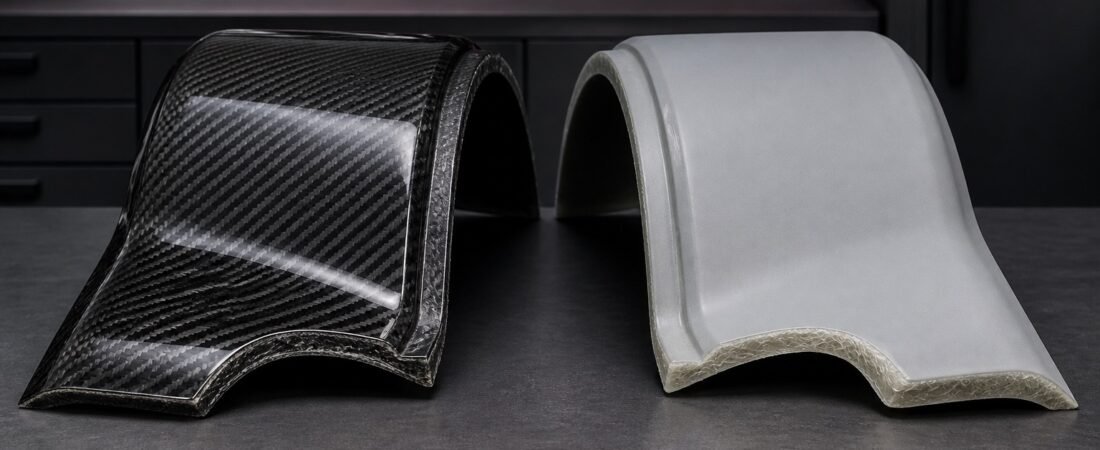
Carbon fiber composite combines carbon reinforcement with a resin matrix. Fiberglass replaces the carbon reinforcement with glass fiber. The fibers carry much of the load, while resin holds them in position, transfers load and protects the laminate. Fiber direction, number of layers, core materials, resin ratio and curing method can matter as much as the fiber name.
This is why a thin decorative carbon skin should not be compared directly with a reinforced fiberglass structural panel. Before comparing two products, confirm whether each is a complete replacement part, an outer skin, an overlay or a mixed-material construction.
Weight: is carbon fiber lighter than fiberglass?
Carbon fiber can provide higher stiffness at a lower mass, which allows a designer to meet a target with less material. But the final part weight depends on its geometry, thickness, inner frame, core, resin content and mounting reinforcement. A heavily reinforced carbon panel may weigh more than a lightly built fiberglass part.
Ask suppliers for the measured finished weight of the exact product. For a hood, trunk or fender, include brackets, vents and transferred hardware in the comparison. Weight claims without a product-specific measurement are not enough for a buying decision.
Stiffness, strength and damage behavior
Carbon fiber is valued for its stiffness-to-weight potential. That can help a large panel hold its shape with less mass. Fiberglass is usually less stiff for the same mass, but it can offer useful toughness and may tolerate certain low-energy impacts differently. Neither material is indestructible.
Composite damage may include surface cracks, broken fibers, delamination or separation between an outer skin and inner frame. After an impact, inspect more than the visible clearcoat. Safety-critical or load-bearing parts should be evaluated by a qualified composite specialist.
Appearance and finishing
Exposed carbon
Carbon parts are often purchased for their visible weave. Twill, plain weave and forged-carbon texture create different appearances. Consistent weave direction, clean edges and UV-resistant clearcoat are key quality indicators. Matching separate parts can be difficult if they come from different production batches or use different fabric.
Painted fiberglass
Fiberglass parts are commonly delivered in gelcoat or primer and then prepared by a body shop. They are suitable when the final panel will match the vehicle paint. Surface preparation may include blocking, pinhole correction, test fitting and final primer before paint.
Painted carbon
Carbon fiber can also be painted. Some builds use full paint; others expose a central weave section and paint the edges. If the carbon look will be hidden completely, decide whether the weight and stiffness benefits justify the price for that specific application.
Cost and total project value
Fiberglass usually has a lower purchase price because glass reinforcement is less expensive and many processes are familiar to body-kit manufacturers. Carbon fiber costs more due to material, controlled layup, curing, cosmetic requirements and rejection risk for visible surfaces.
Compare total installed cost, not just the panel price. Include test fitting, preparation, paint or clearcoat, mounting hardware, packaging, freight and possible repair. An accurately molded carbon part may require less paint work, while a fiberglass part intended for paint can be the more sensible choice for a color-matched project.
Repair and long-term ownership
Fiberglass repairs are common in body shops: damaged material can be removed, the area re-laminated and the surface refinished. Carbon repair can also be possible, but maintaining structural continuity and restoring a seamless visible weave requires more specialized work. Repainting a repaired fiberglass panel may hide the repair; exposed carbon is less forgiving cosmetically.
Both materials need protection from prolonged UV exposure through a suitable paint or clearcoat system. Inspect mounting points, edges and high-vibration areas during maintenance. A loose fastener can damage either laminate over time.
Which material suits each automotive part?
Hoods, trunks and roof panels
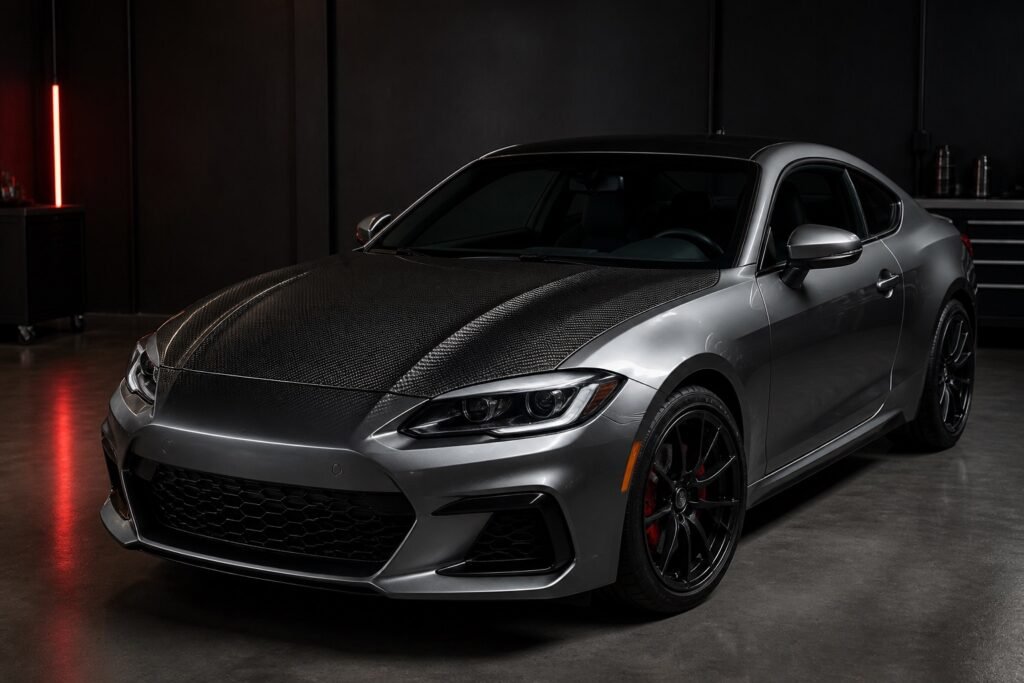
Carbon fiber is attractive where reducing mass and maintaining stiffness are priorities. The complete inner frame, hinges, latch and road-use requirements remain essential. Read the carbon fiber hood buying guide before comparing panels.
Front lips, splitters and side skirts
These parts operate close to curbs and road debris. Carbon provides a premium finish and can be light, but cosmetic damage is visible and repair may be costly. Painted fiberglass can be practical for a street build where occasional refinishing is expected.
Spoilers and wings
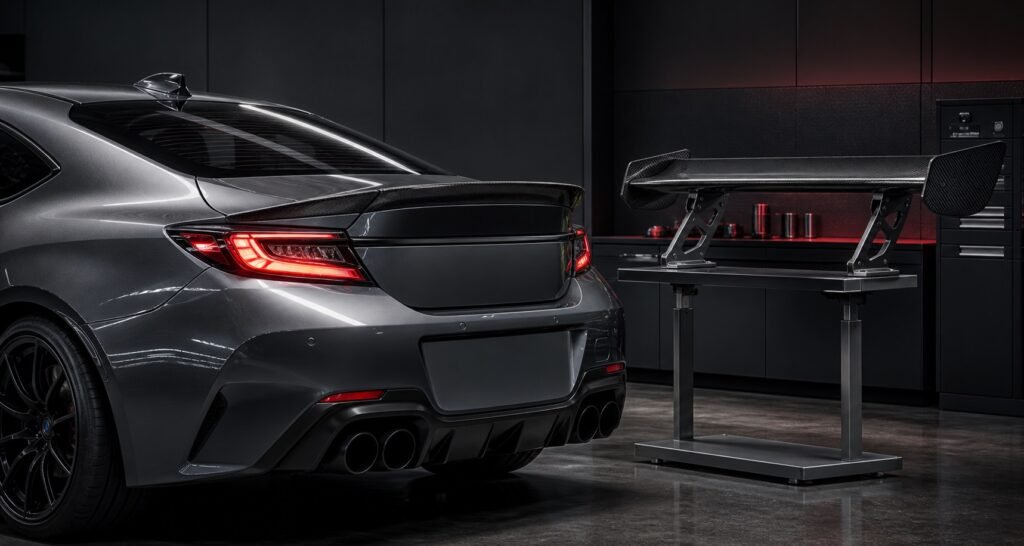
Carbon’s stiffness and low mass can suit aero components, but aerodynamic performance comes from shape and mounting, not material alone. A spoiler vs wing comparison helps define the correct product type.
Wide-body kits and bumpers
Fiberglass can be cost-effective for large painted kits that will be blended into the vehicle. Carbon is selected when exposed finish, reduced mass or a premium specification is central to the project. Large kits in either material should be fully test fitted before paint.
Interior trim
For non-structural trim, appearance, edge quality, heat resistance and attachment method may matter more than absolute strength. Clarify whether a piece is a replacement part or an overlay.
Buyer checklist for either material
- Confirm exact vehicle make, model, year, generation and body style.
- Ask whether the part is full carbon, carbon skin, fiberglass or mixed composite.
- Request measured weight and included hardware when weight matters.
- Review installed photographs showing panel gaps on the same vehicle version.
- Confirm finish: raw, gelcoat, primer, gloss clearcoat, matte clearcoat or painted.
- Inspect underside construction, bonded frames and mounting reinforcement.
- Ask about preparation, installation, lead time, packaging and shipping terms.
- Choose a workshop experienced with the selected material.
Use the carbon fiber car parts collection to compare product types, or read the pre-preg vs forged carbon guide for additional material terminology.
Frequently asked questions
Is carbon fiber stronger than fiberglass?
Carbon fiber generally offers higher stiffness and strength potential by weight, but a finished part’s performance depends on fiber orientation, thickness, resin, core, geometry and manufacturing quality.
Is fiberglass more durable for a daily driver?
It can be a practical choice for painted, repairable exterior parts, especially near road hazards. Durability still depends on design, thickness, mounting and use.
Can fiberglass look like carbon fiber?
A fiberglass part can receive a carbon-look film or a cosmetic carbon layer, but that does not make the underlying structure full carbon. Product descriptions should state the actual construction.
Which is easier to repair?
Fiberglass is usually easier and less expensive for a typical body shop to repair and repaint. Structural or exposed-weave carbon repair generally requires specialist skill.
Should I choose carbon fiber for every body panel?
No. Choose it where weight, stiffness or exposed appearance provides value. Fiberglass, plastic or metal may be more suitable for budget, impact exposure, local repair access or factory integration.
Choose the complete part, not just the fiber name
Carbon fiber is the stronger choice for many lightweight, stiff and exposed-finish applications. Fiberglass remains valuable for painted, repairable and cost-conscious builds. The best purchase is the part with correct fitment, honest construction details, suitable reinforcement and a finish matched to the intended use. Send RevexaAuto your vehicle, target part, finish and delivery country for a material and fitment discussion.