
Quick answer: To measure wheel bolt pattern, count the mounting holes and identify the diameter of the circle through their centers. On 4, 6 and 8-lug patterns, measure between opposite centers. On five-lug patterns, use a dedicated gauge and confirm the exact specification; a tape-measure estimate is not a purchase approval.
Five holes can look right and still be the wrong fit. The difficult part is rarely counting them. It is distinguishing a close measurement from an exact mounting specification, especially when a used wheel has no readable label or the seller only knows which car it came from.
This guide explains how to measure wheel bolt pattern, where the five-lug shortcut can mislead you, and what to send a supplier before ordering. It covers mounting geometry. For the separate question of how far a wheel sits inward or outward, use the RevexaAuto wheel offset guide.
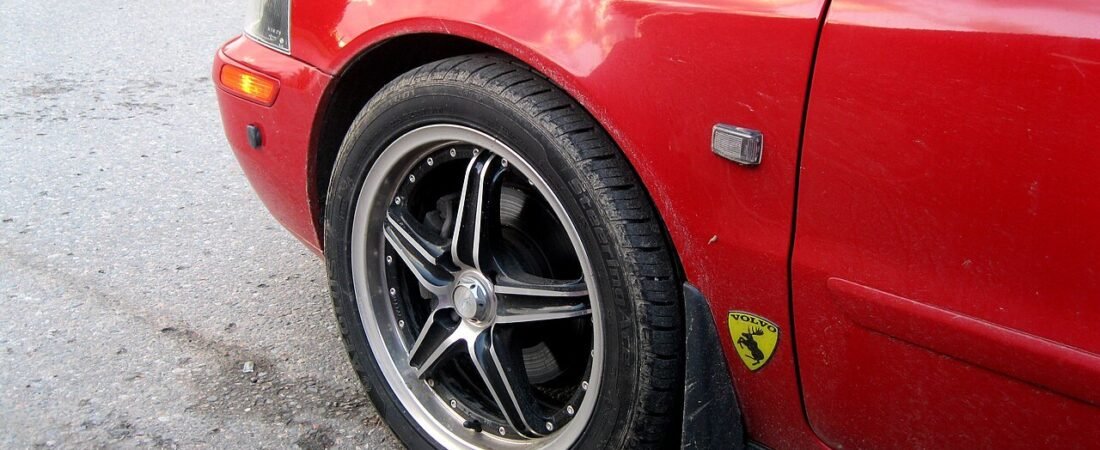
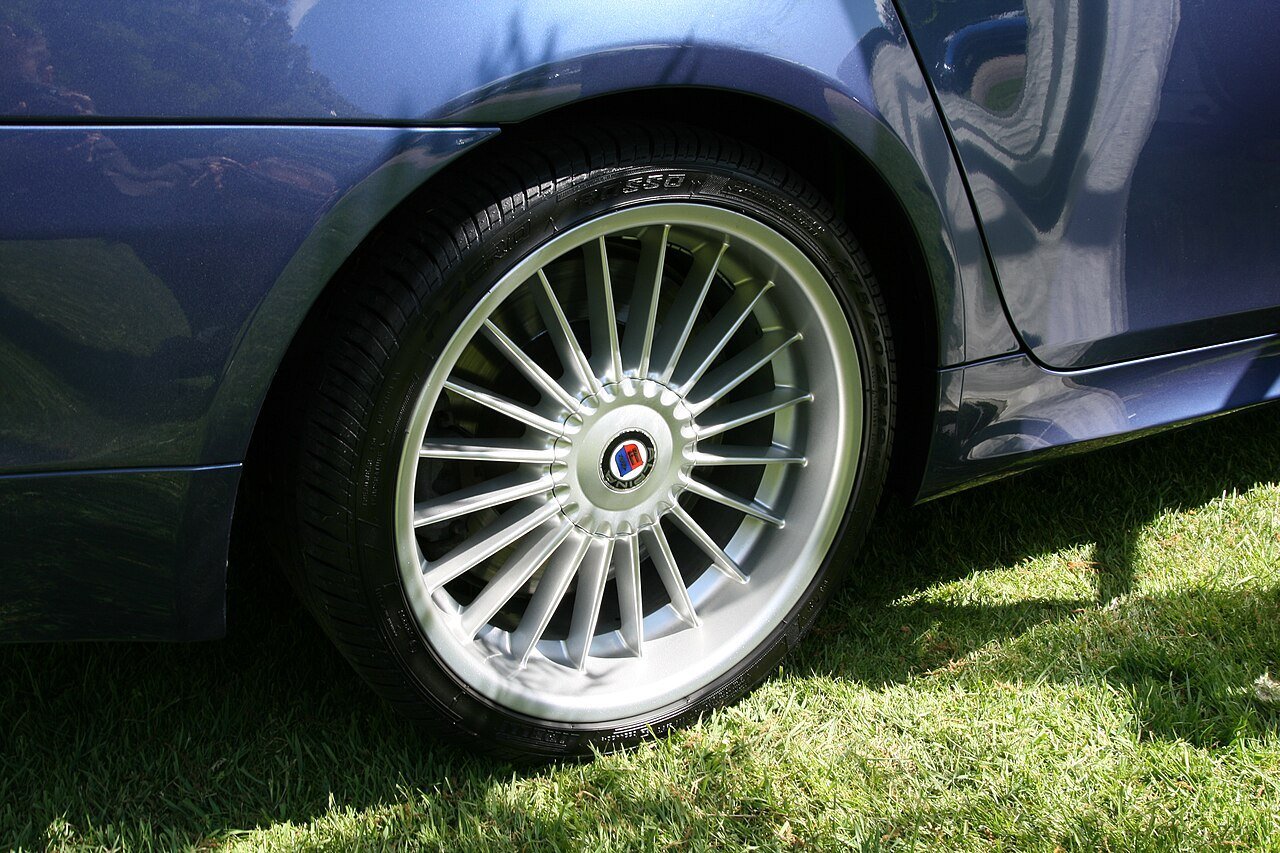
Cover photograph: Count the mounting holes separately from decorative openings in the wheel face. Photo: Santeri Viinamäki, CC BY-SA 4.0, via Wikimedia Commons. Resized and recompressed; photo retains its stated license. Illustrative real photograph; not a RevexaAuto catalog image.
1. Read the bolt-pattern code before measuring
A code such as 5×114.3 means five mounting holes on a circle 114.3 millimeters in diameter. That circle is the pitch circle, and its diameter is the PCD. The second number is neither the center-bore diameter nor the distance between adjacent holes.
Write the unit beside the measurement. Inches and millimeters can describe the same pattern: 5×4.5 inches equals 5×114.3 millimeters because 4.5 multiplied by 25.4 is 114.3. Conversely, 5×115 and 5×114.3 are different specifications. Do not round one into the other.
Tire Rack’s bolt-pattern measurement guide explains the imaginary circle and cautions that a five-lug hand measurement is an estimate. Use that limitation to decide when a gauge or professional check is necessary.
2. Prepare a clean, readable mounting reference
Start with a ruler or caliper marked in millimeters, a light, a photograph of the wheel markings and, for uncertain five-lug patterns, a purpose-made PCD gauge. Record whether you measured the loose wheel or the vehicle hub. A clear note prevents the supplier from interpreting a center-bore reading as PCD.
If the mounting interface cannot be accessed safely, ask a tire shop to inspect it. Removing a wheel requires the vehicle manufacturer’s lifting and support procedure. Do not crawl under a vehicle supported only by a jack to obtain a measurement.
- Count the holes that actually receive wheel fasteners.
- Remove visual confusion from center caps or lug covers.
- Read any stamped dimensions or part number.
- Check the front and rear wheels separately.
- Photograph the reference points used for each reading.
For a dual-drilled wheel, identify one complete mounting pattern at a time. Ten visible mounting holes may represent two five-lug patterns. Combining holes from different circles produces a number that describes neither application.
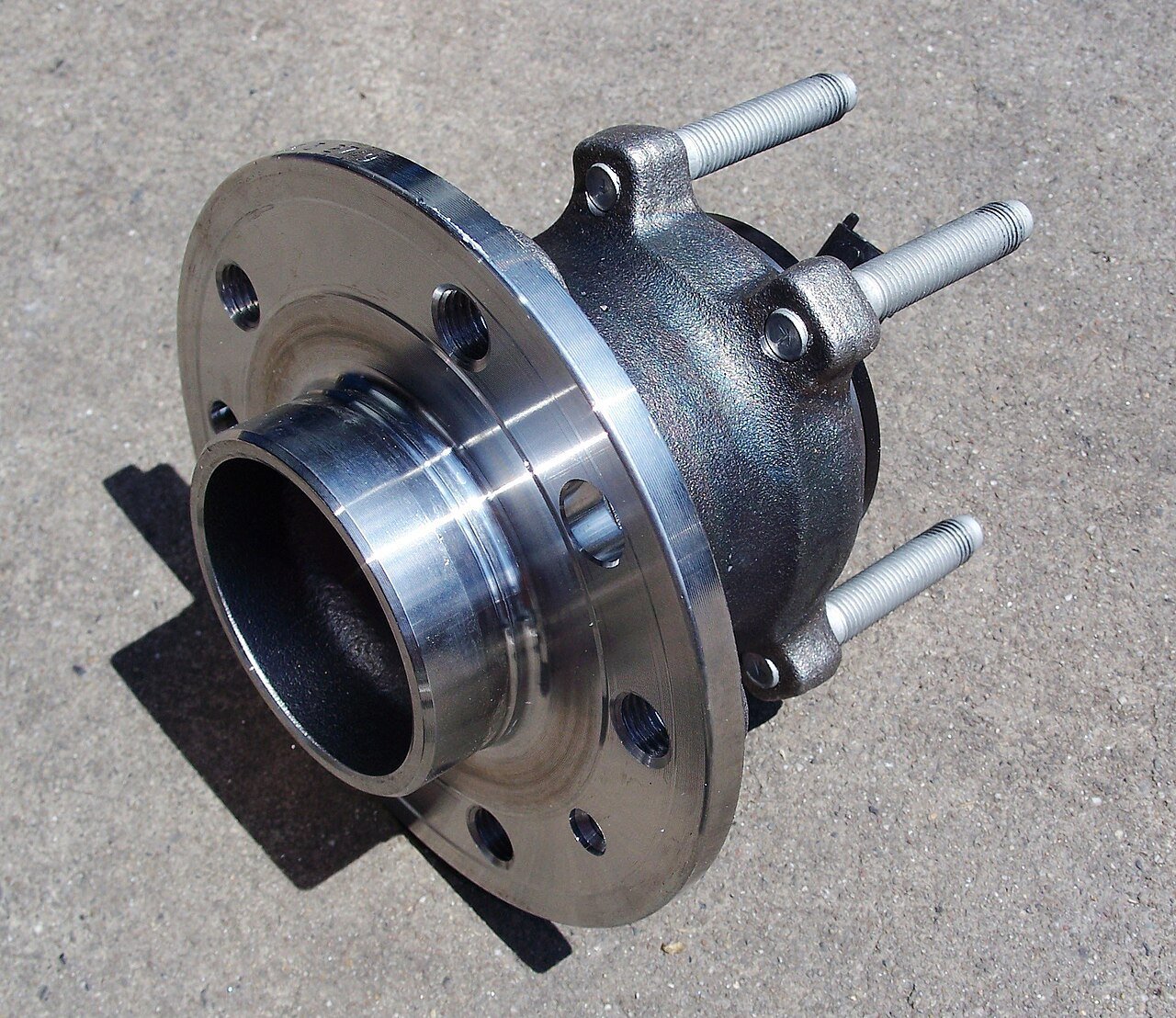
3. Measure 4, 6 and 8-lug patterns across opposite centers
With an even number of equally spaced lugs, one mounting position has a directly opposite partner. Measure from the center of one to the center of the other. Keep the ruler across the mounting circle rather than at an angle across the outer wheel face.
Repeat the reading across another opposite pair. A disagreement can reveal an off-center ruler, dirt obscuring the reference, a damaged hole or a mistaken count. Record the readings before looking up the expected pattern so that you do not unconsciously force the result to match it.
| Layout | Useful measurement | Next decision |
|---|---|---|
| 4 lugs | Opposite center to center | Compare with the exact vehicle and wheel specifications |
| 6 lugs | Opposite center to center | Repeat across another pair |
| 8 lugs | Opposite center to center | Confirm units and the exact application |
| 5 lugs | Dedicated PCD gauge preferred | Do not approve a close pattern from a rough ruler reading |
4. Treat a five-lug shortcut as an estimate
A five-lug wheel has no hole directly opposite another. A straight center-to-center reading between widely separated holes is a chord, not the full pitch-circle diameter. This is why applying the even-lug method to five lugs gives a misleading result.
Some hand-measurement instructions use a center-to-far-reference shortcut across the pattern. Its accuracy depends on exactly where the reference lies. Countersinks, tapered seats, hole diameter and ruler angle make informal descriptions easy to misinterpret. Use the shortcut to narrow the possibilities, then verify with a gauge or documented dimensions.
The APEX bolt-pattern and centerbore guide is a useful manufacturer reference for separating these two measurements. A wheel’s styling, center badge or previous owner is not a substitute for its exact mounting data.
5. Check the dimensions that a matching PCD cannot answer
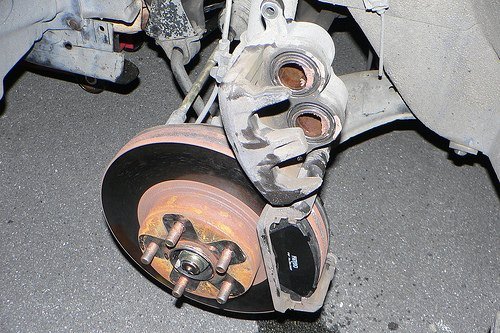
Correct PCD is only the first approval. A wheel must also seat correctly and clear the vehicle through its operating range. Tire Rack’s fitment engineering explanation lists separate checks for center bore, mounting interference, load capacity, hardware and suspension clearance.
Use a two-stage decision. First reject a pattern mismatch. Then review the rest of the package: wheel diameter and width, offset, brake template, hub location, tire specification and axle requirements. This keeps one correct number from hiding several unanswered questions.
The centerbore guide explains the locating interface at the hub. A decorative center cap performs a different job. Neither a cap nor a hub ring changes the wheel’s bolt pattern.
6. Match the fasteners, not just the number of holes
Thread pitch and seat shape need their own confirmation. A nut that screws onto a stud may still have the wrong contact surface for the wheel. McGard’s installation guidance calls for matching the thread, seating surface and hardware application, including engagement.
Have the installer check the actual wheel and hardware combination. Keep the original hardware identified if the spare wheel requires a different arrangement. Do not let a seller’s “fits five-lug cars” description stand in for an application-specific specification.
7. Send a complete fitment brief before buying
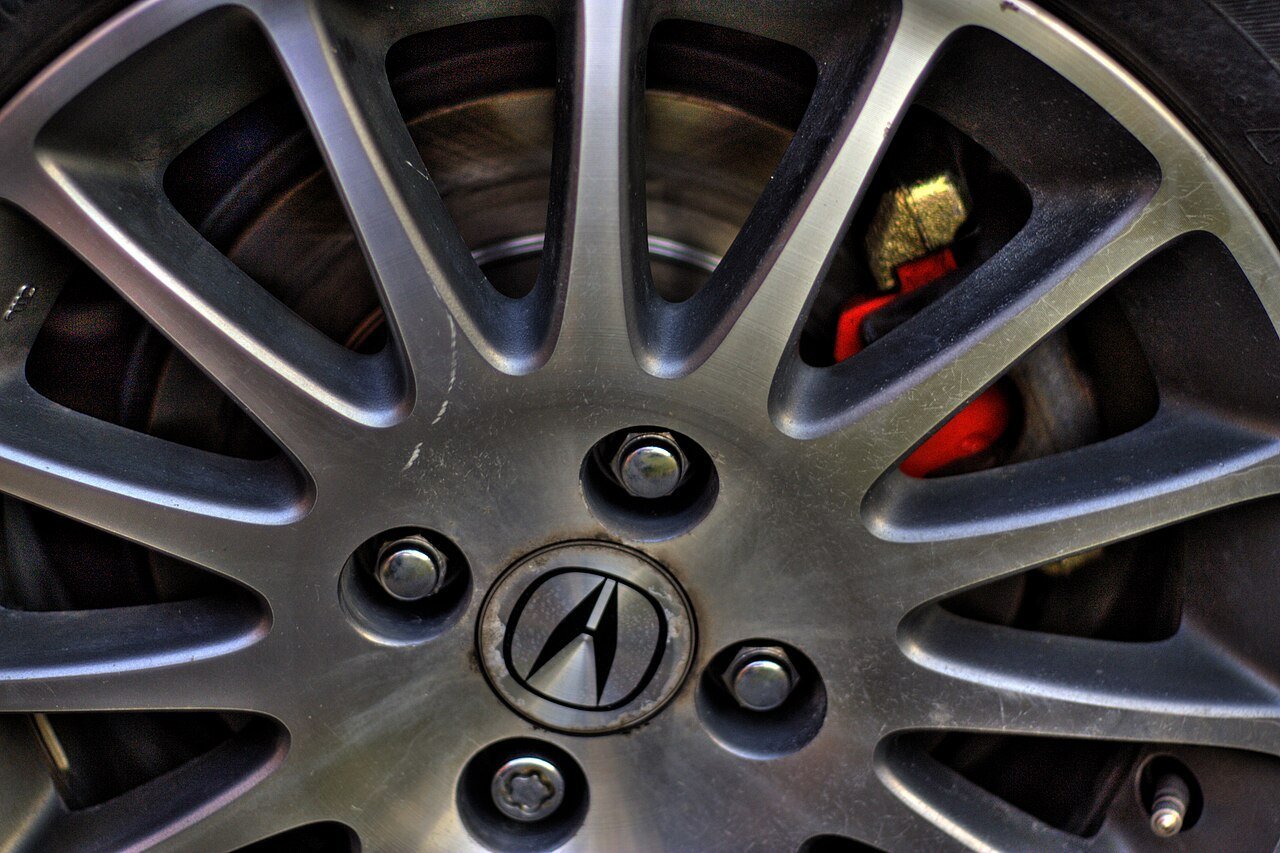
A useful inquiry is a small evidence package rather than a photograph of the desired stance. Send the vehicle year, make, model, body style, market, drivetrain and brake package, followed by the proposed front and rear wheel specifications. Identify aftermarket brakes, suspension changes and existing spacers.
Attach photographs of the current wheel markings and your measurements. Ask the supplier to distinguish a confirmed specification from a provisional recommendation. If the wheel is custom-made, resolve the drawing, load rating, hardware and brake-clearance questions before machining begins.
Use this copyable request: “Please confirm this exact vehicle’s mounting pattern and center bore, front and rear width/ET, brake clearance, wheel load rating, tire compatibility and required fasteners. My measurement is provisional; please identify the application data used to approve the order.”
Finish the wheel build after structural fitment is confirmed
Once the wheel specification is settled, compare accessories by their own interfaces. RevexaAuto’s BMW carbon fiber floating wheel caps require cap-opening and retention checks. The Mercedes floating center caps are a separate application; the visible badge diameter does not establish clip fit.
For another finishing detail, review the Toyota GR wheel tire valve stems set and confirm the exact item type, valve compatibility and TPMS requirements before ordering. These accessories do not correct an incompatible wheel mounting pattern.
Before driving, follow the vehicle and wheel supplier’s installation procedure. Tire Rack’s installation instructions discuss hand-starting hardware, using the specified torque and checking the installed package. There is no universal torque value for every wheel and vehicle.
Frequently asked questions
Is wheel bolt pattern the same as PCD?
PCD is the mounting circle’s diameter. The complete bolt pattern combines the lug count with that diameter, such as 5×114.3 mm.
Can I measure a five-lug wheel with a tape?
You can obtain an estimate, but close patterns are easy to confuse. Confirm the exact pattern with a dedicated gauge and reliable vehicle or wheel specifications before buying.
Are 5×114.3 and 5×115 interchangeable?
They are different nominal patterns. Do not round or force the fit. Have the supplier approve the exact mounting specification and hardware.
Does matching PCD guarantee a wheel fits?
No. Center bore, width, offset, brakes, load capacity, tire compatibility and hardware still require review.
By RevexaAuto Editorial. Sources checked October 7, 2026. This is a sourced buying and measurement guide, not a report of RevexaAuto vehicle testing. The six independent photographs illustrate components and do not certify any product’s fitment.




_Version_ST,_2022.jpg)