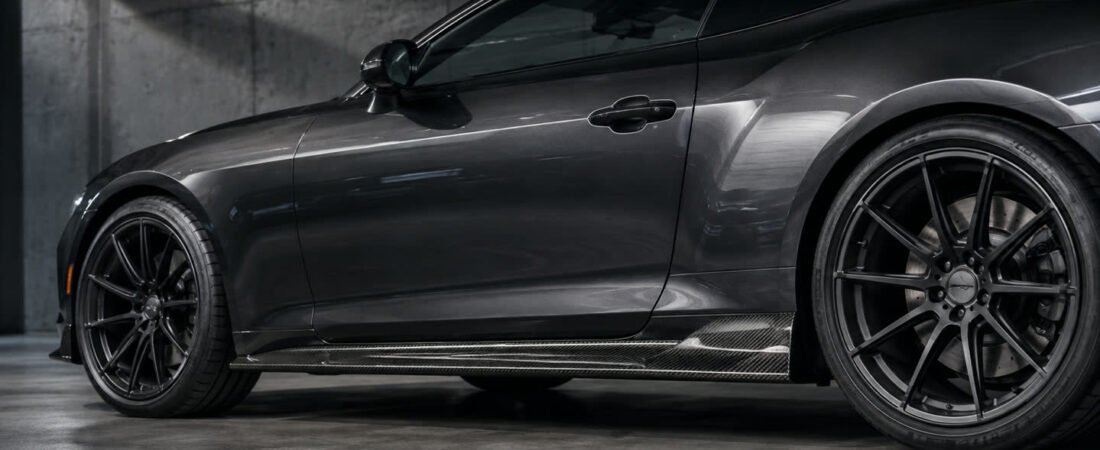
Carbon fiber side skirts can make a performance car look lower, connect the front and rear aero visually and add a real exposed-carbon finish. They are also one of the easiest exterior parts to damage or misfit: the panel is long, sits close to the road and must follow the rocker line precisely.
The quick answer
Before you buy, verify seven things: the exact vehicle application, the side-skirt construction, real installed clearance, front-to-rear alignment, mounting method, finish quality and the complete installation plan. A well-made part should sit evenly, clear the doors and wheels, use secure attachment points and suit the roads the car actually drives.
Why this purchase needs more checking than a small trim part
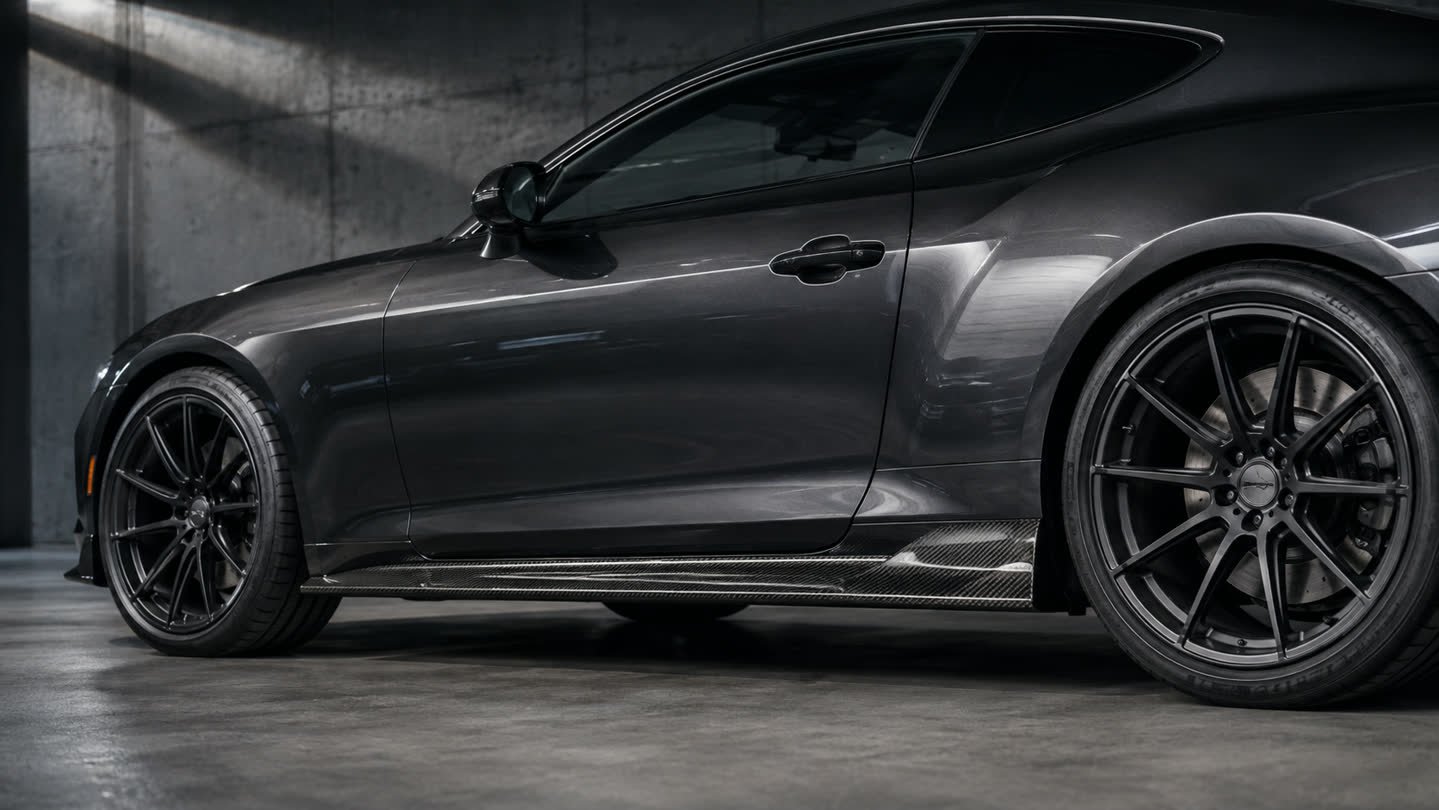
A side skirt runs between two wheel arches across one of the longest visible lines on the body. Small differences in length, curvature or mounting position become obvious when the door opens or light reflects along the weave. The part also lives near road debris, curbs, lift arms and steep driveways.
That does not make carbon side skirts impractical. It means the buying decision should begin with vehicle data and installed evidence, not a close-up weave photograph. Use the following seven checks as a pre-order checklist.
1. Confirm the exact vehicle application
Start with make, model, model year, generation, body style and market version. A facelift can change a bumper edge, rocker molding or wheel-arch transition even when the car has the same model name. Coupe, sedan, wagon and long-wheelbase versions may also use different sill lengths.
Tell the supplier about factory appearance packages, OEM side skirts and any aftermarket front lip, fender or rear extension already installed. Ask for photographs of the same part on the same vehicle generation. The most useful images show both complete sides, the front and rear transitions, the underside mounting line and the doors open.
A product being described as “for” a model is not the same as a fitment confirmation. Ask whether it replaces the factory rocker molding, overlays it or attaches beneath it. That answer changes both installation and the finished width.
2. Know what the part is actually made from
The phrase carbon fiber can describe several constructions. A full carbon-composite skirt, a carbon outer skin over fiberglass and a thin cosmetic overlay may look similar from the top. They can differ in mass, stiffness, underside finish, mounting reinforcement and repair options.
| Construction | What it usually means | What to ask |
|---|---|---|
| Full carbon composite | Carbon reinforcement forms the main laminate. | Ask about layup, cure process, finished weight and reinforced mounting areas. |
| Carbon skin with composite backing | Visible carbon is combined with fiberglass or another composite underneath. | Ask which surfaces are carbon and how the skin and backing are bonded. |
| Carbon overlay | A cosmetic carbon layer covers an existing or separate substrate. | Confirm the substrate, added thickness and attachment method. |
| Carbon-look plastic or film | The appearance is printed, molded or wrapped rather than made with carbon reinforcement. | Make sure the listing does not imply structural carbon construction. |
None of these labels guarantees good fitment. Honest construction details simply let you compare like with like. For a broader material comparison, see our carbon fiber vs fiberglass guide.
3. Measure real-world ground clearance
Do not judge clearance from a catalog image. Park the car on level ground in its normal driving setup and measure the current lowest points near the rocker, front lip and underbody. Then review how far the proposed side skirt extends down and outward.
Include the conditions that cause contact in daily use: driveway breakovers, parking ramps, speed bumps, uneven shoulders, tire replacement, passengers or cargo and suspension compression. A skirt that survives a flat showroom floor may still touch when one wheel climbs a ramp.
Also consider service access. Confirm where a workshop may position lift arms or jack pads after installation. A wide skirt can hide the factory lifting point or create a fragile edge next to it. Add compatible jack-point access or an approved lifting procedure before the car returns to regular use.
4. Check the complete alignment—not just the middle
The middle of a long skirt can look correct while either end is wrong. Inspect four relationships:
- Front wheel arch: the leading edge should meet the fender or front extension without a sudden step.
- Rear wheel arch: the trailing edge should align with the rear quarter or matching extension.
- Door clearance: doors must open through their full travel without rubbing the skirt.
- Left-to-right symmetry: both sides should sit at the same height and project outward evenly.
If the build combines parts from different makers, do not assume their surfaces will meet. Compare dimensions and installed photos, and expect a professional installer to evaluate transitions before permanent work begins.
5. Match the mounting method to the part
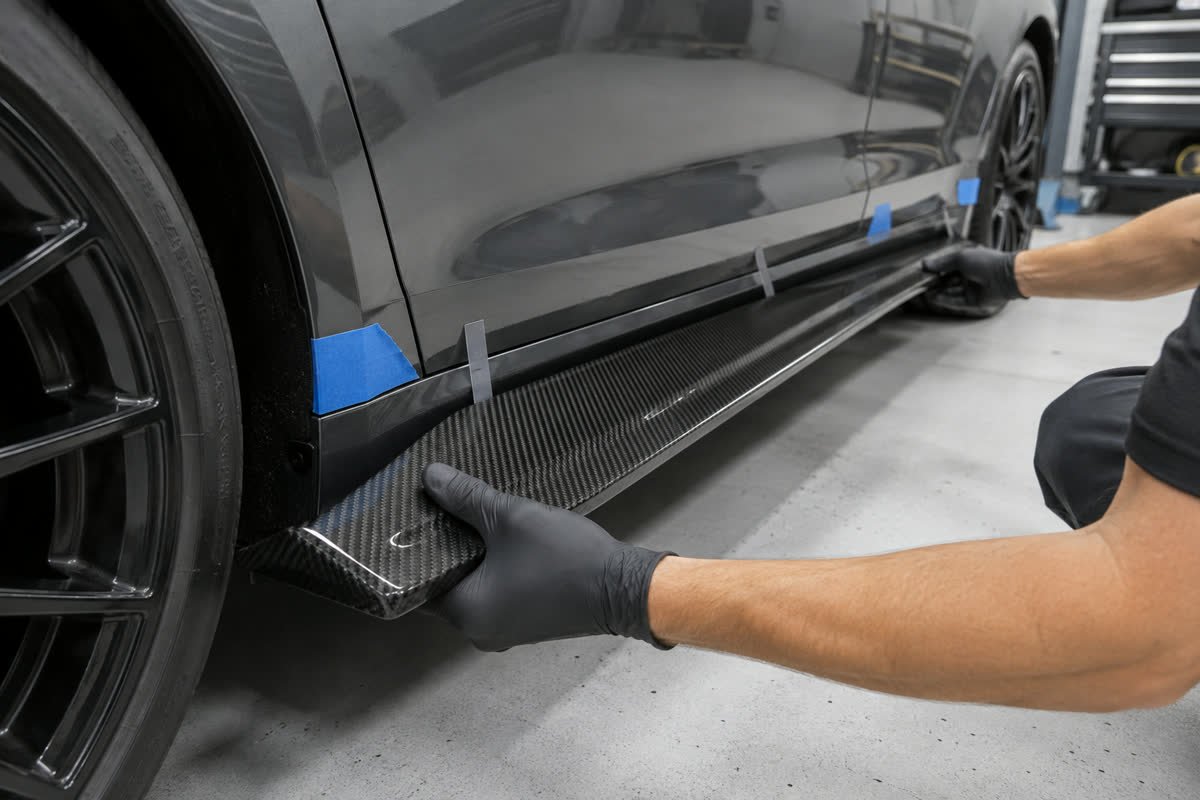
Possible mounting systems include factory clips, original screws, new brackets, rivnuts, bolts, automotive adhesive or high-strength tape. Some products use a combination. The correct method depends on the part geometry and the load path designed by the manufacturer.
Ask whether hardware, brackets, templates and instructions are included. Check whether holes arrive pre-drilled and whether those holes match factory positions. Mechanical fastening is especially important where the skirt is exposed to vibration, airflow or accidental contact. Adhesive can support close surface contact, but it should not replace specified fasteners simply to avoid drilling.
Before installation, inspect the vehicle side of every proposed hole. Wiring, sensors, trim clips, drainage paths and corrosion protection can sit behind the visible rocker. A qualified workshop should select fasteners, seal penetrations and protect metal surfaces appropriately.
6. Inspect the visible finish and the hidden structure
Buyers naturally focus on weave direction and gloss, but the underside often reveals more about the part. A useful inspection covers:
- consistent weave with no obvious distortion, dry spots, cloudy resin or heavy pooling;
- smooth, sealed edges without exposed fibers;
- clean bonding between outer and inner sections;
- mounting tabs that are square, reinforced and positioned consistently;
- a finish described clearly as gloss, matte, raw or paint-ready;
- UV protection appropriate for an exposed exterior part;
- matching weave direction and color tone when paired with a front lip or rear diffuser.
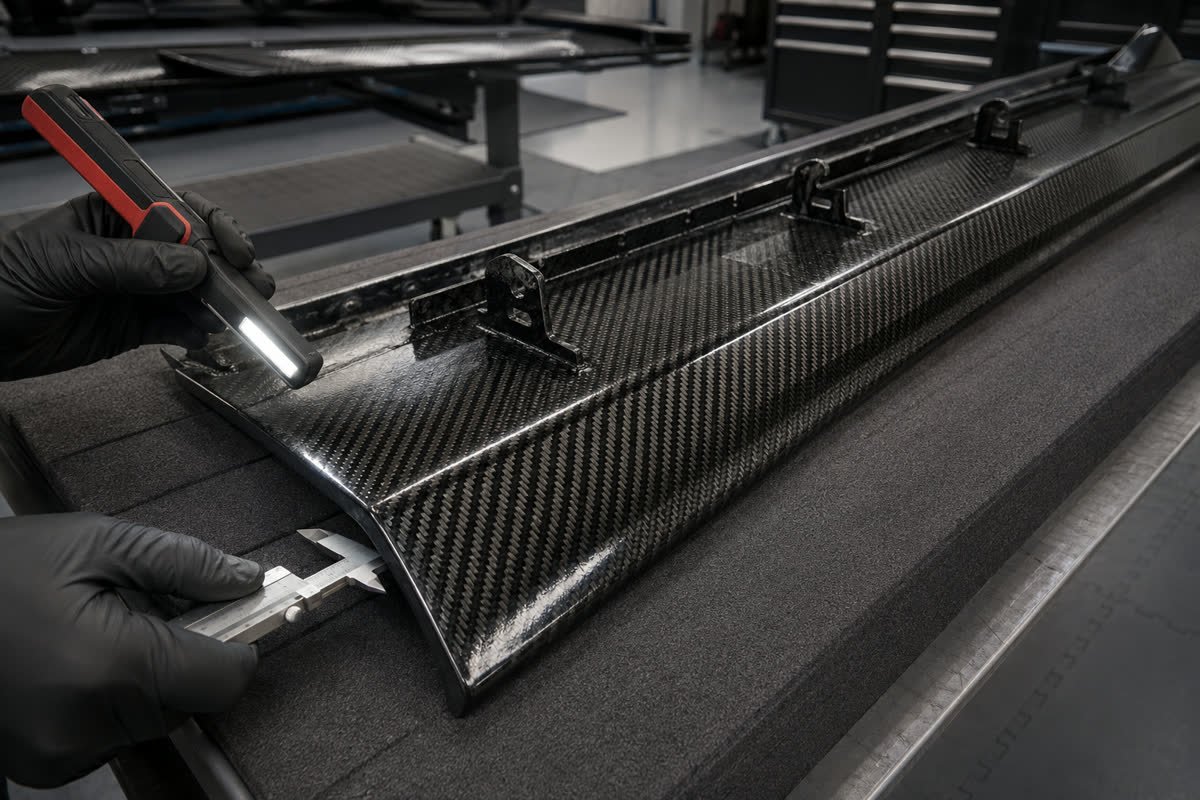
Ask for current close-ups from the actual product style, not only highly compressed catalog renders. Minor cosmetic variation is normal in hand-finished composites, but mounting areas and critical edges should be consistent.
7. Plan the whole installation before ordering
A professional dry fit should happen before drilling, bonding, paint correction or protective film. The installer should support the part along its length, confirm door and wheel clearance, mark the centerline and compare both sides. Do not force a long composite panel into position; stored stress can pull on fasteners or encourage cracking later.
Budget for the complete job: removal of factory trim, test fitting, small alignment adjustments, approved hardware, surface preparation, corrosion protection, adhesive curing time and final inspection. If paint protection film or a ceramic coating is planned, the installer should decide whether it is applied before or after final mounting based on edge access.
International buyers should also confirm packaging. Long narrow components need rigid support, protected corners and enough space around projecting ends. Ask whether the quotation includes the crate or reinforced carton, shipping terms and a process for documenting transit damage.
Vehicle-specific vs universal side skirts
| Factor | Vehicle-specific | Universal or multi-fit |
|---|---|---|
| Shape | Molded around a defined rocker and wheel-arch transition. | May require cutting, bracket fabrication or end-cap adaptation. |
| Installation certainty | Usually higher when the exact generation is confirmed. | Depends heavily on installer measurement and fabrication. |
| Finished appearance | More likely to integrate with factory body lines. | Can work for custom builds but may look added-on. |
| Best use | Road cars and application-led upgrades. | Fabrication projects with a clear design plan. |
“Universal” means adaptable, not guaranteed to fit. For most buyers who want a clean result and predictable labor, a confirmed vehicle-specific design is the safer starting point. Browse the RevexaAuto side skirts collection by application.
Do carbon fiber side skirts improve aerodynamics?
A side-skirt shape can influence how air moves along the body and around the underfloor, but the effect belongs to the complete vehicle system. Ride height, floor design, wheel wake, front splitter, diffuser, speed and skirt geometry all matter. Simply changing the material from fiberglass or plastic to carbon fiber does not create downforce.
If the main goal is measurable track performance, ask for vehicle-specific development or test information and coordinate the skirt with the rest of the aero package. If the main goal is styling, describe it honestly as a styling-led upgrade with potential mass and stiffness advantages from the selected construction.
How to protect side skirts in daily use
- Approach steep ramps and driveway entries at a shallow angle when safe.
- Keep factory jack-point access visible and tell service shops where to lift the car.
- Wash road grit away with automotive-safe products instead of rubbing a dry surface.
- Inspect fasteners, adhesive edges and mounting tabs after any contact.
- Use clear protective film on impact-prone leading sections when compatible with the finish.
- Have cracks or delamination evaluated by a composite specialist before continued use.
Frequently asked questions
Are carbon fiber side skirts worth it?
They can be worthwhile when you want a real carbon finish, a lighter exterior component and a more complete lower-body design. Value depends on accurate fitment, durable mounting and enough ground clearance for the way the car is used.
Do carbon fiber side skirts improve aerodynamics?
A vehicle-specific side-skirt shape may influence airflow along or beneath the car, but carbon fiber alone does not create an aerodynamic benefit. Treat performance claims as application-specific and ask for test data when aero is the main goal.
Can carbon fiber side skirts be installed with tape only?
Only when the product manufacturer specifies an adhesive-only installation. Many designs require clips, screws, bolts or a combination of mechanical fasteners and automotive adhesive. Follow the instructions for the exact part.
How much ground clearance should side skirts have?
There is no universal number. Measure the lowest point on your own vehicle and account for ramps, driveways, speed bumps, suspension travel, tire size and local roads before choosing a design.
What is the difference between full carbon and a carbon overlay?
A full carbon part uses carbon-fiber reinforcement as the main composite structure. An overlay uses a thin cosmetic carbon layer over another substrate. Both can look similar in photographs, so ask the supplier to state the complete construction.
Final buying checklist
A good purchase is not just a glossy weave. Confirm the vehicle, construction, ground clearance, alignment, mounting, finish and installation plan in writing. Save the product specification and installed-reference images with the order, and use a workshop that understands long composite exterior parts.
For the wider project, read our carbon fiber body kit buying guide and guide to choosing carbon fiber car parts. Or send RevexaAuto your vehicle details, preferred design, finish, quantity and delivery country for a fitment review.