A carbon fiber license plate frame is a small upgrade, but it sits in one of the most visible and regulated areas of a vehicle. A frame that is too wide can hide characters or registration details. A poorly molded frame can rattle, bow or damage the paint around the plate recess. The best choice is slim, correctly sized, securely mounted and honestly described.
Carbon fiber license plate frame: the quick answer
Start with the exact plate dimensions and your vehicle’s mounting pattern. Choose a slim frame that leaves every character, jurisdiction name and registration sticker visible. Confirm whether the product is real carbon fiber or only carbon-look plastic, inspect the back and edges, and use corrosion-resistant hardware with protective washers. Check the rules that apply where the vehicle is registered before installation.
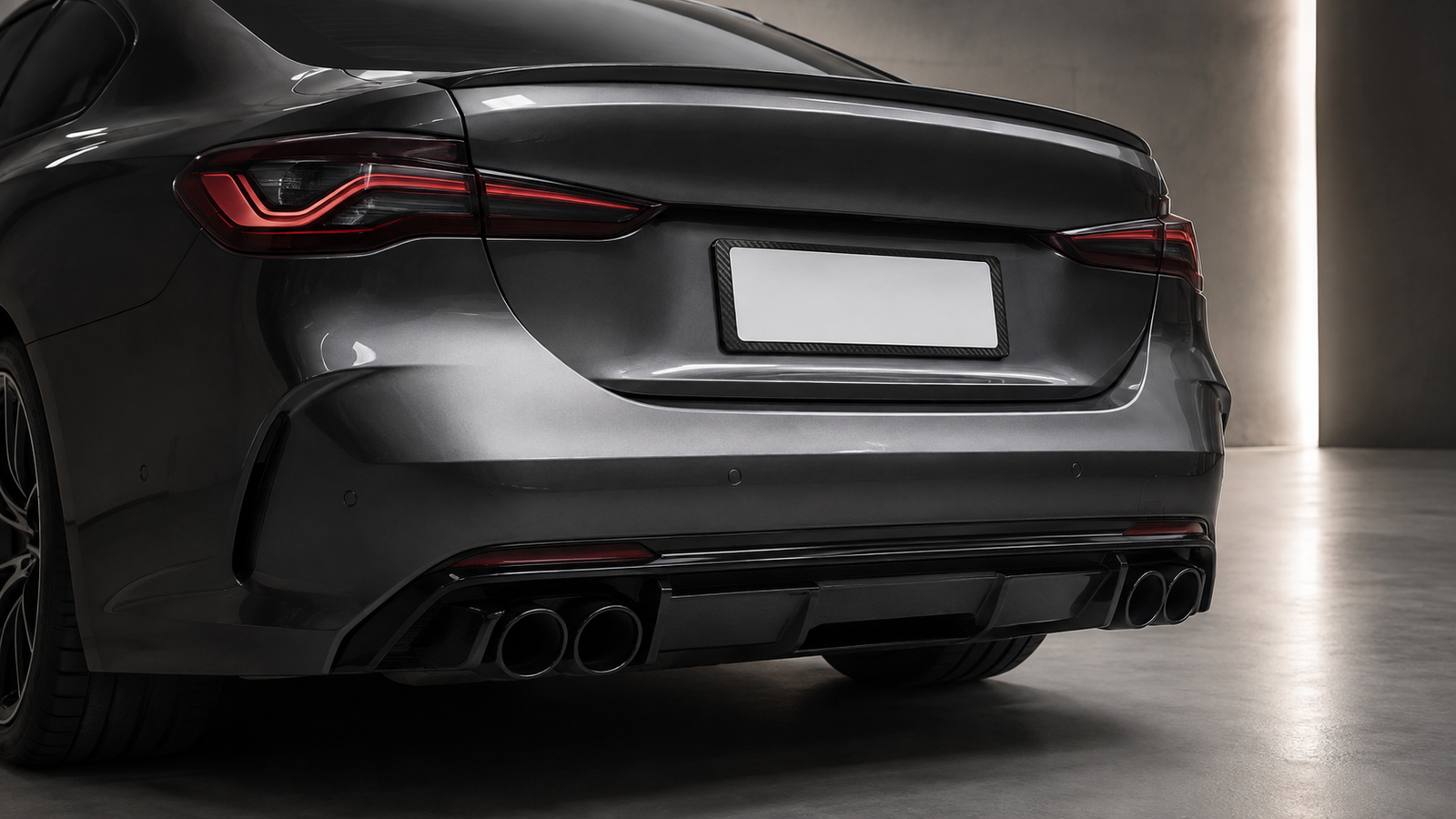
Why a simple license plate frame needs a fitment check
Online listings often use the word “universal,” but plate formats, mounting holes and bumper recesses differ by country and vehicle. A frame may match a common North American plate yet be unsuitable for a European oblong plate, a Japanese-format plate or a motorcycle plate. Even when the plate itself fits, a thick edge or raised screw cap can contact the trunk handle, camera or tailgate trim.
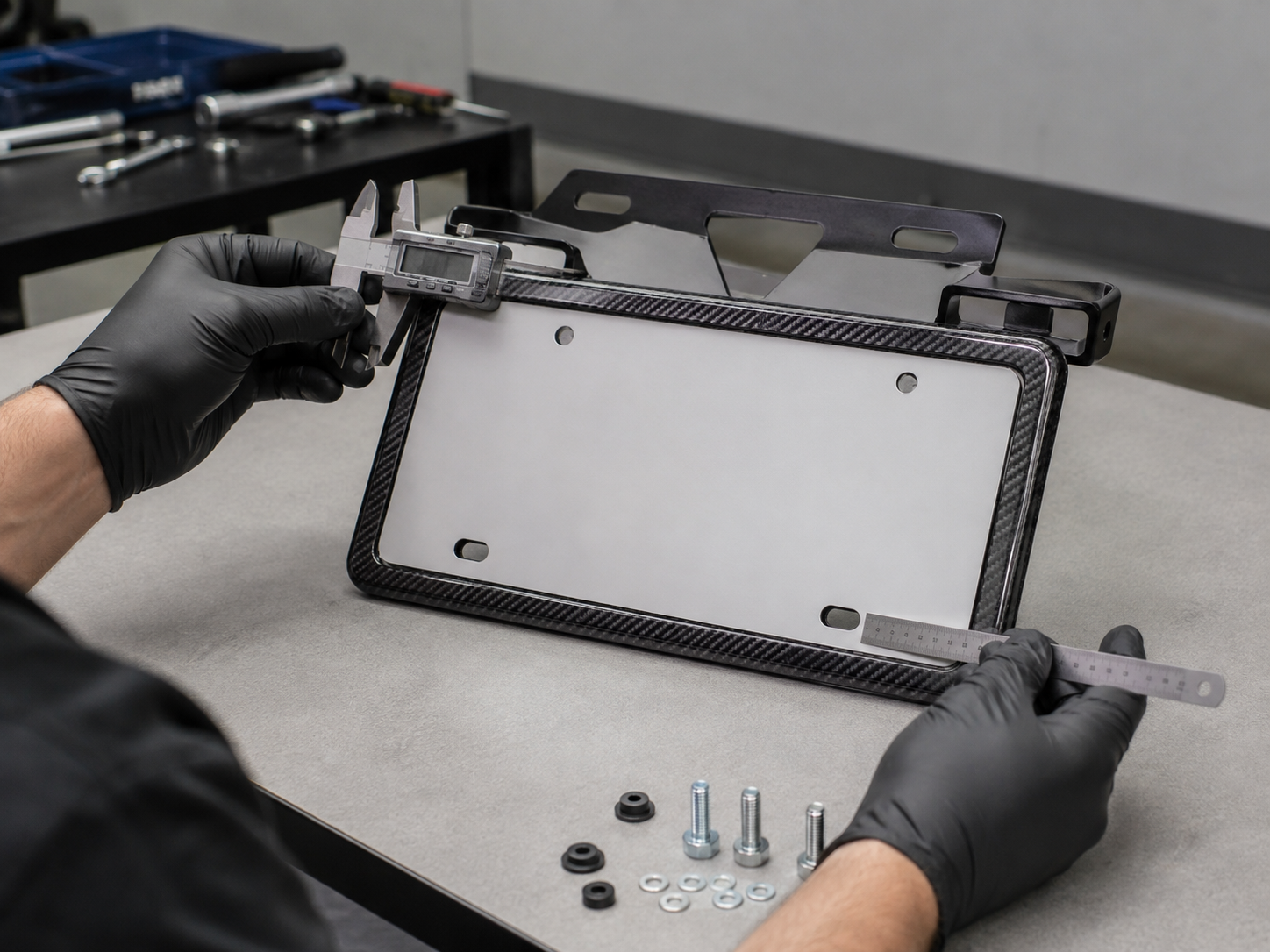
The buying process should therefore begin with measurements and photographs, not only a vehicle name. Take a straight-on photograph of the installed plate and a second photograph with the plate removed if possible. Record the plate width and height, center-to-center hole spacing, number of usable mounting holes, recess depth and clearance to nearby trim.
The 7 checks to make before you buy
1. Match the frame to the plate format
Confirm the actual plate dimensions in millimeters or inches. “US size,” “European size” and “motorcycle size” are useful categories, but the seller should still provide the frame’s outside dimensions, visible opening and hole spacing. The visible opening is especially important because it determines how much of the plate remains unobstructed.
Do not scale dimensions from a product photograph. Wide-angle images and blank display plates can make a border look thinner than it is. Ask for a dimensioned drawing or measure an approved sample when ordering for resale.
2. Keep plate information and stickers visible
A frame should not cover any required letter, number, jurisdiction name, registration sticker or validation mark. Avoid tinted shields or decorative covers that reduce readability. Rules differ by location, and a design that is acceptable in one market may not be acceptable in another, so verify local requirements before road use.
A slim open frame is generally easier to evaluate than a deep border or enclosed cover. After installation, look at the plate from straight behind and from normal off-center viewing angles. If any required information is hidden, remove or replace the frame.
3. Check two-hole, four-hole and vehicle mounting patterns
Some vehicles support the plate from two upper holes; others use four holes or a separate adapter bracket. The carbon frame should sit flat with the mounting points you actually have. An unsupported lower edge can vibrate, while forcing a flat frame into a curved recess can create stress around the screw holes.
| Mounting detail | What to confirm | Why it matters |
|---|---|---|
| Hole count | Two-hole, four-hole or vehicle-specific bracket | Prevents an unsupported or misaligned frame |
| Hole spacing | Center-to-center distance and slot length | Shows whether adjustment is available |
| Recess clearance | Frame outside width, height and corner radius | Avoids contact with the bumper or tailgate trim |
| Nearby equipment | Camera, trunk switch, lights and sensors | Keeps vehicle features accessible |
4. Verify real carbon fiber versus carbon-look material
A genuine carbon fiber license plate frame uses carbon reinforcement in the part or a real carbon skin over a stable core. A carbon-look frame may use printed plastic, hydro-dip, vinyl or a patterned coating. Either can serve as a cosmetic accessory, but the construction should be stated accurately and priced accordingly.
Request close photographs of the front, back, edges and mounting holes. Real woven carbon should show believable fiber continuity around corners, while a printed pattern often repeats uniformly. Also ask whether the product is full carbon, carbon laminated over a polymer or metal base, or only a visual finish. The material name does not replace the need for good tooling and edge work.
5. Inspect edge sealing, flatness and clearcoat
The frame is exposed to sunlight, rain, washing chemicals and road contamination. Inspect the clearcoat for pinholes, cloudy resin, dry fabric, waviness and heavy buildup around the holes. Edges should be smooth and sealed so fibers are not exposed. The frame should rest flat without twisting when placed on a level surface.
Ask whether the finish is gloss, satin or matte and what UV-resistant coating is applied. UV protection can extend appearance, but no exterior clearcoat is maintenance-free. If the frame must match mirror caps, a spoiler or other exposed carbon, specify weave style, weave direction and sheen before ordering.
6. Review the supplied hardware
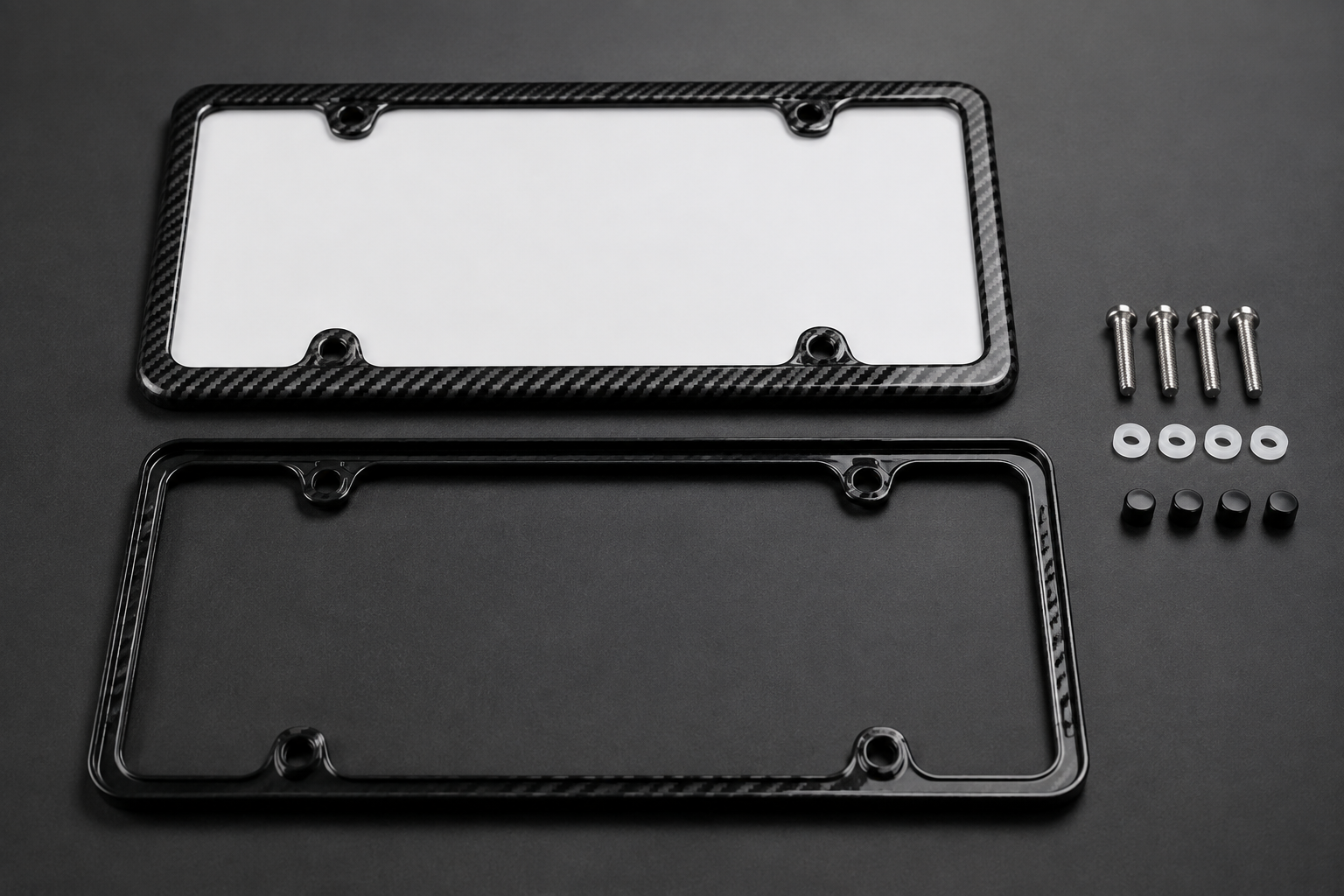
Corrosion-resistant screws, nylon or rubber washers and protective caps help prevent rust streaks, surface marks and vibration. The screw length must suit the vehicle bracket; a screw that is too long can bottom out or contact hidden components. A screw that is too short may not achieve secure engagement.
Do not overtighten fasteners against carbon composite. Tighten evenly and follow the product or vehicle instructions. If a security fastener is supplied, keep the matching tool in a known location. Decorative caps should lock positively and remain removable for plate renewal.
7. Evaluate packaging and supplier evidence
A thin frame can be scratched or bent in transit. It should arrive in a protective sleeve with rigid support around the full perimeter and separation between the carbon surface and loose hardware. For wholesale orders, approve one sample for dimensions, weave, finish, branding and packaging before production.
A useful quotation identifies the plate format, frame dimensions, material stack, finish, included hardware, order quantity, lead time and replacement policy. Browse RevexaAuto’s vehicle accessories collection for related detail parts, or send the team a drawing when your market uses a less common plate format.
How to install a carbon fiber license plate frame
- Park safely, switch off the vehicle and clean the plate recess.
- Remove the existing plate and retain any vehicle-specific bracket or spacers.
- Dry-fit the plate and frame together without tightening the screws.
- Confirm that the camera, lamps, trunk release and all plate information remain clear.
- Add the supplied protective washers and start every screw by hand.
- Tighten gradually in an even pattern until secure; do not crush or distort the frame.
- Close the trunk or tailgate carefully and check clearance before driving.
Recheck the fasteners after the first drives and after any plate renewal. If the frame rattles, find the source instead of simply adding more torque. A thin non-abrasive isolator may help when approved for the product, but it should not trap water against painted surfaces.
Is a real carbon fiber plate frame worth it?
It is most worthwhile when you want a small piece of genuine exposed carbon to coordinate with the rest of the vehicle. Weight savings are negligible at this scale, so the purchase should be judged on finish, accurate fitment and durability rather than performance claims. A well-made frame can provide a cleaner detail than a printed plastic imitation, but only if it keeps the plate fully usable.
Clean the frame with automotive-safe shampoo and a soft microfiber towel. Avoid abrasive polish on matte finishes and strong chemicals around edge seals. Inspect the clearcoat, screw holes and washers during routine washing.
Carbon fiber license plate frame FAQ
Do carbon fiber license plate frames fit every car?
No. Many are made for a common plate format, but vehicle recesses, brackets and hole patterns still vary. Compare actual dimensions before ordering.
Is a carbon fiber license plate cover the same thing?
Not necessarily. A frame is an open border. A cover may include a clear or tinted shield over the plate. Covered or tinted products can create visibility and compliance problems, so confirm exactly what is included and check local rules.
Will a carbon frame block a reversing camera?
A correctly sized frame should not, but cameras mounted close to the plate can be sensitive to a thick upper edge or tall screw cap. Dry-fit the frame and review the camera image before final tightening.
Can a real carbon frame crack?
Yes. Carbon composite is stiff, but it can be damaged by overtightening, impact, poor edge finishing or excessive bending. Use suitable washers and do not force the frame to follow an incompatible curve.
Send the plate specification, not only the vehicle name
The safest order includes the plate dimensions, visible-opening requirement, hole spacing, vehicle-recess photograph, preferred weave and finish, hardware requirement, quantity and delivery country. You may also compare small-part material expectations in our carbon fiber vs fiberglass guide. Send RevexaAuto your specification for a fitment and sourcing review.
Reviewed by the RevexaAuto Technical Team. Plate-display rules vary by jurisdiction. Confirm local requirements and keep all required plate information visible.