
Floating center caps promise a subtle effect: the emblem appears upright while the wheel turns. The hard part of buying a set is not understanding the effect; it is finding a cap that actually locks into your wheel. Front diameter alone does not prove compatibility. The rear clips, insertion diameter, depth, wheel design and specific vehicle or wheel part number can all change the answer. This guide explains the mechanism, how to measure the opening, and the checks to make before you order.
Floating center caps: the quick answer
A floating or self-leveling cap has a wheel-mounted outer housing and a separate emblem face that can rotate relative to it. A bearing and an off-center weight commonly keep the emblem approximately upright as the wheel turns. The cap must be designed for the specific wheel opening and retention system. Measure the removed original cap and inspect its rear clips; do not order only by car badge, wheel diameter or the visible logo size. A published floating-cap patent illustrates one bearing-and-weight design.
How do floating center caps work?
In a typical mechanical design, the cap housing turns with the wheel. The emblem is supported by a bearing and weighted below its center, so gravity resists spinning with the wheel and brings the artwork back toward upright. This does not mean the emblem is electronically controlled or perfectly motionless in every driving condition. Friction, acceleration, vibration, bearing condition and wheel speed can make it move temporarily. Another published non-rotating center-cap patent describes a weight, bearing and retention assembly in detail.
BMW’s genuine accessories material describes its floating hub caps as logo caps that remain level rather than turning with the wheel. That is the intended visual result, not evidence that every aftermarket cap fits every BMW wheel. See the BMW accessories brochure for the manufacturer’s description. If a listing claims “floating,” ask whether it means self-leveling, free-spinning or simply a decorative fixed center cap; those are different mechanisms.
Center cap, hubcap and wheel cover: which part are you buying?
A center cap is the relatively small cover at the center of a wheel. A hubcap can refer to a cover over the central hub and lug area; a full wheel cover spans much more of the wheel face. The names are often mixed in product listings, which creates measurement mistakes. Discount Tire’s component guide separates the wheel, rim, hubcap and center cap. A self-leveling logo cap replaces only a compatible cap assembly. It does not alter the wheel’s bolt pattern, offset, load rating or structural fitment.
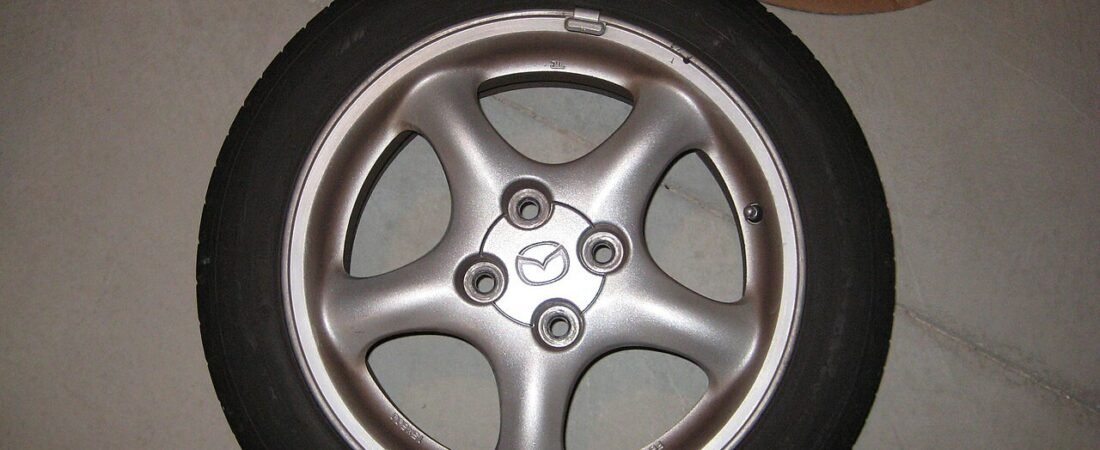
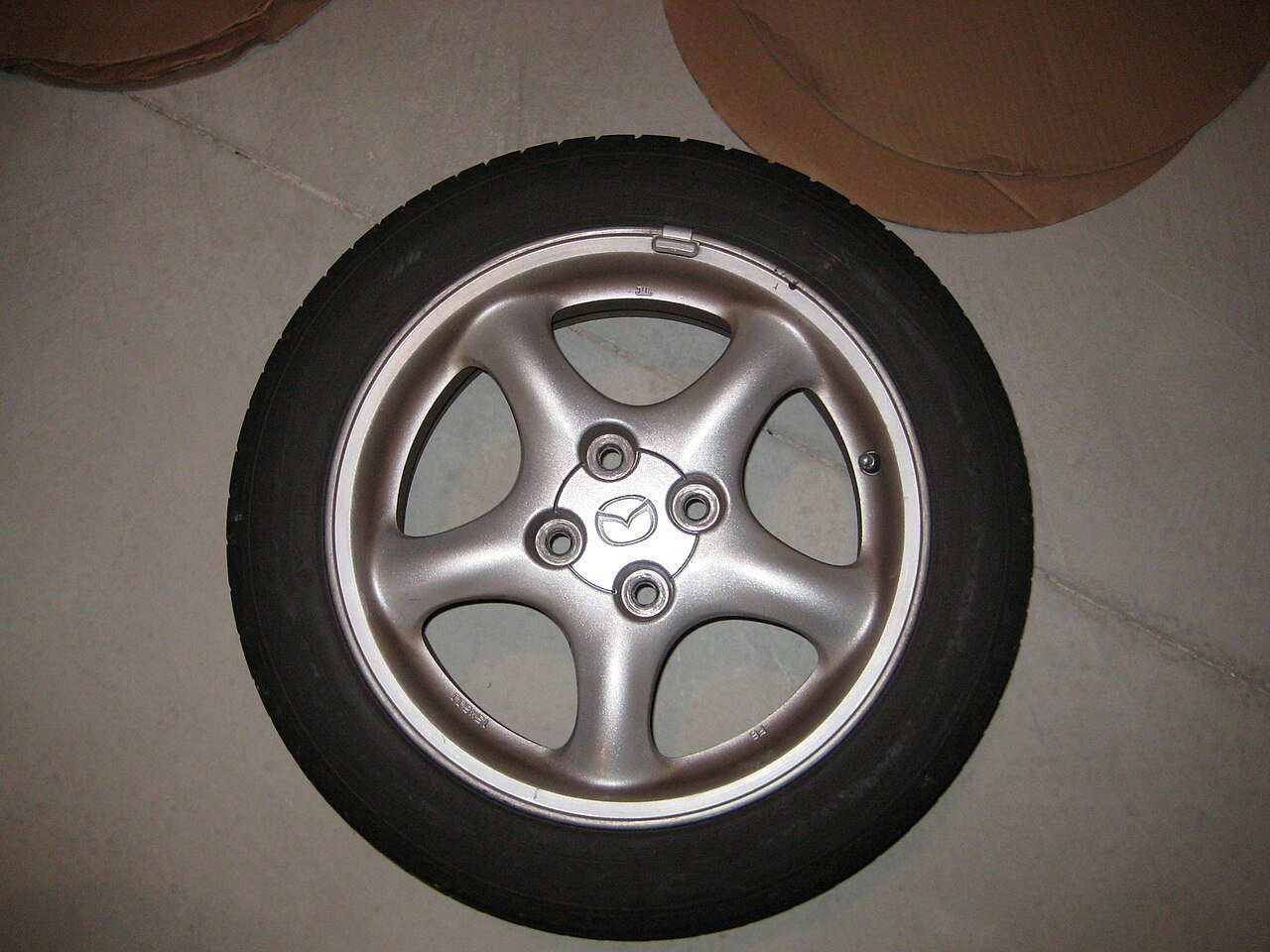
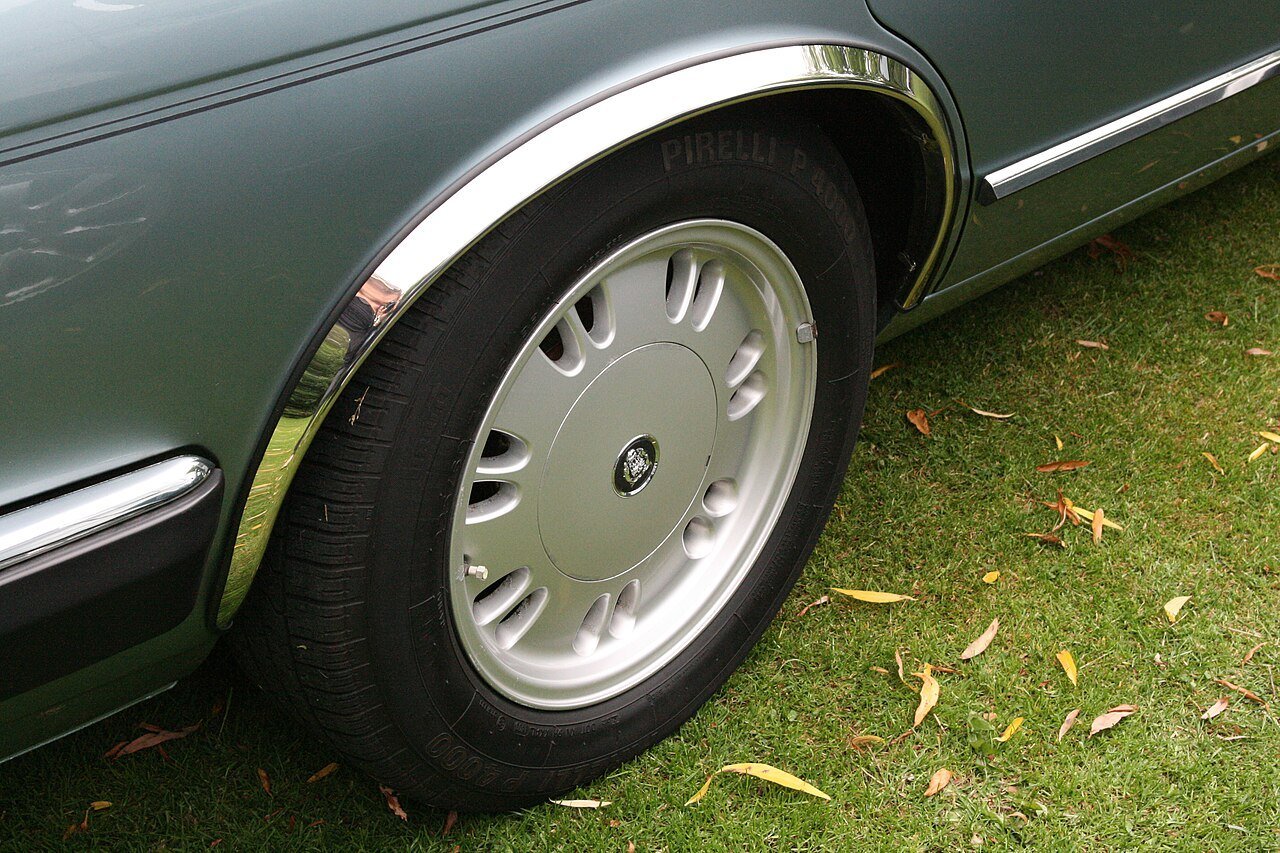
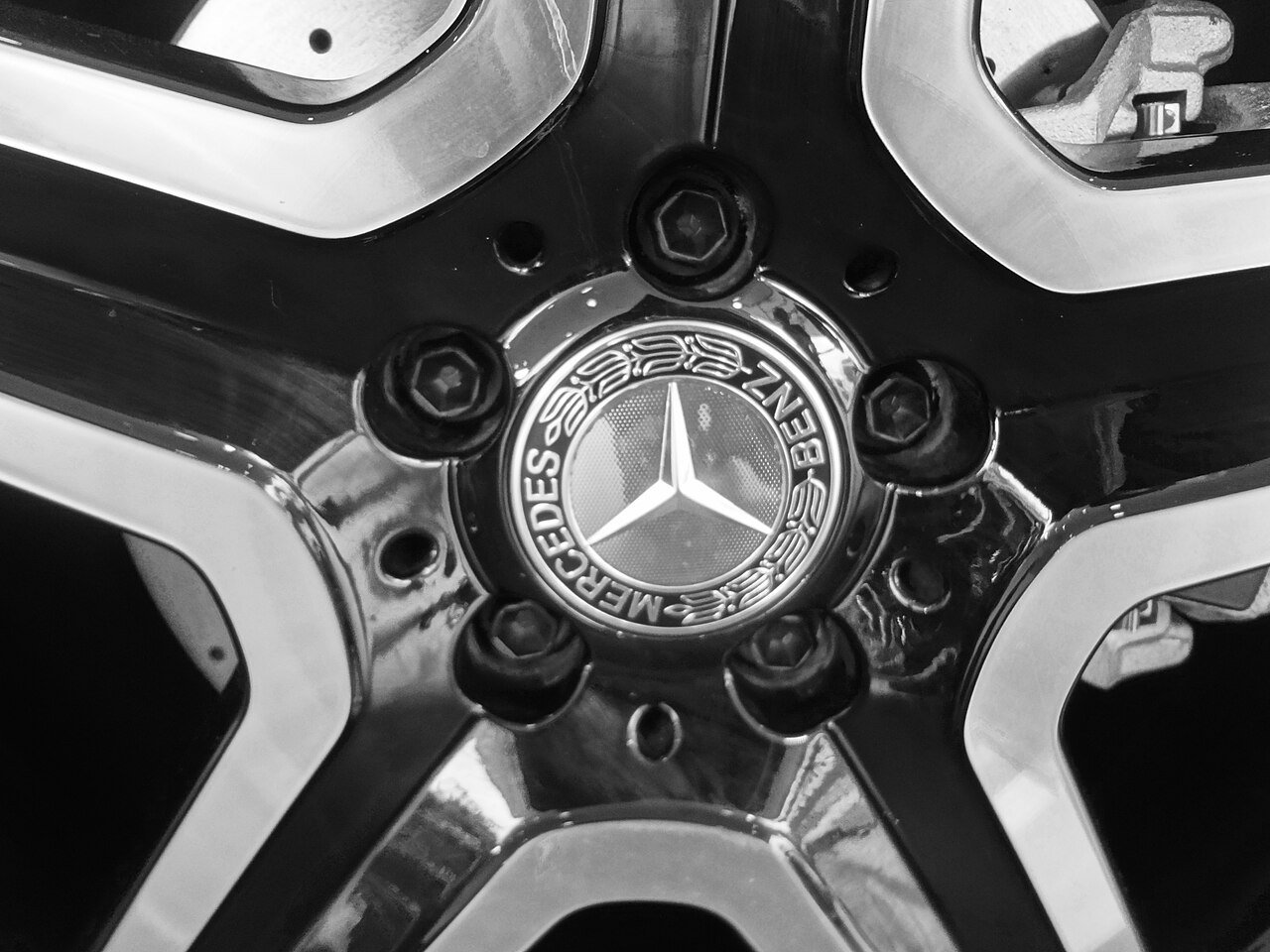
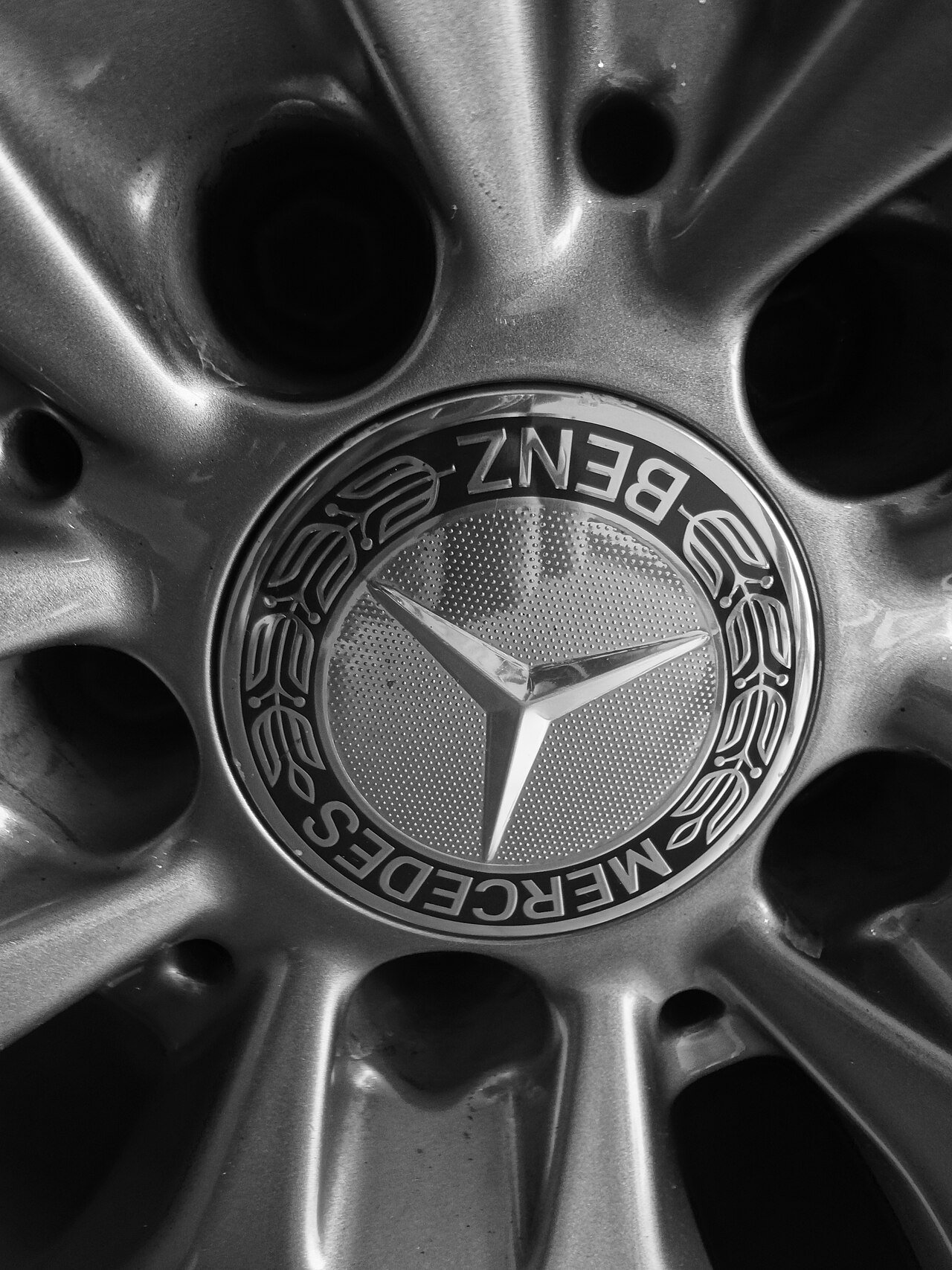
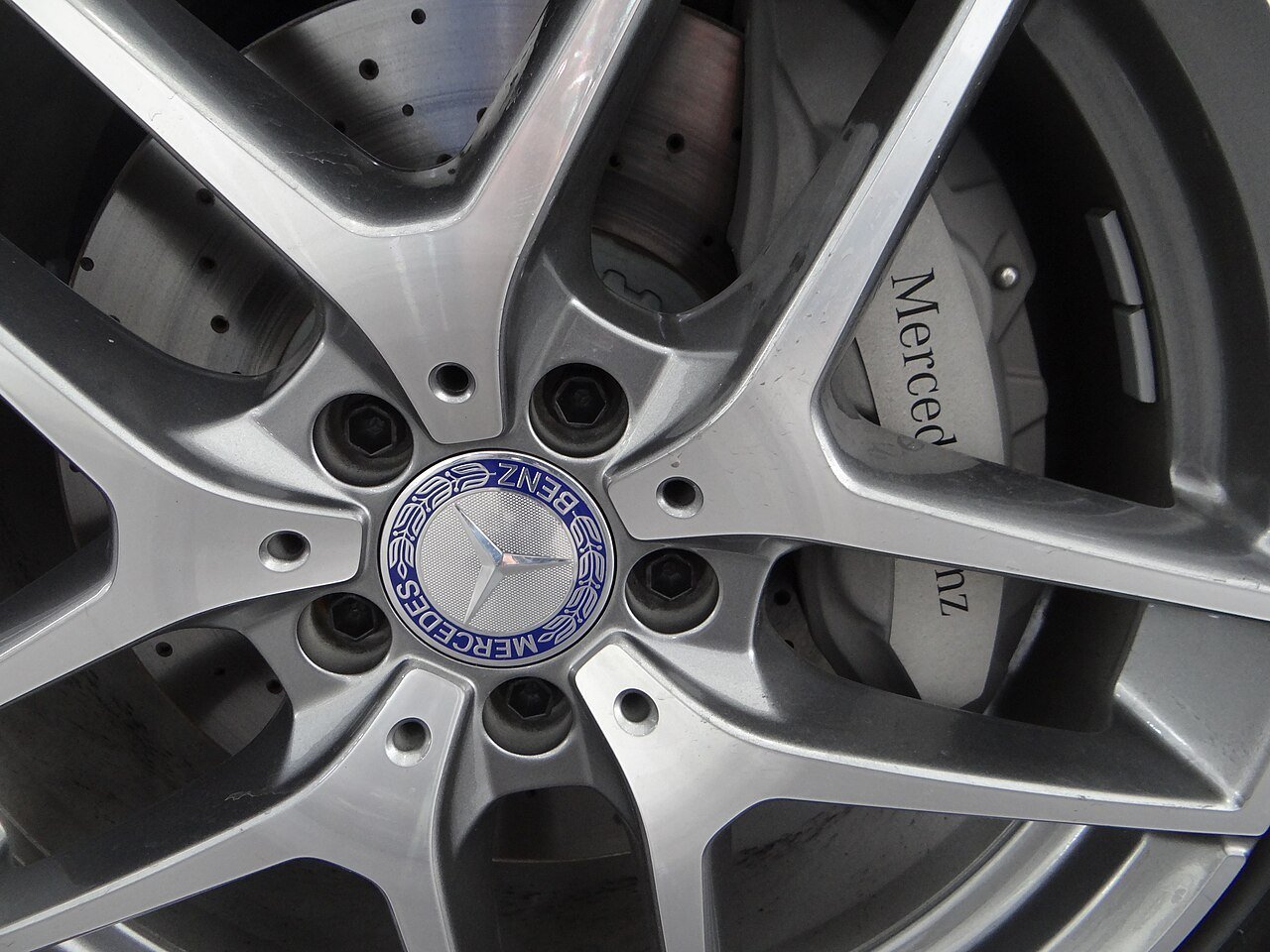
The photographs in this article show real wheels and conventional caps to explain size and attachment. They are illustrative: a still photograph of a wheel cannot prove that its installed cap is self-leveling. For a product purchase, use the seller’s specific part listing and ask for rear-view images or a short video of the mechanism.
How to measure a replacement center cap
Remove one existing cap only by the method recommended for your wheel. Some snap in from the front; others are retained from behind or use a special tool. Never pry against a finished wheel face without protection, and stop if the cap resists because the retention style may be different. A Mercedes-Benz owner’s manual shows that some wheel covers use a specific removal procedure rather than a generic pull-off method.
- Record the wheel identification. Photograph the wheel face, rear of the original cap and any wheel part number. Note whether the wheel is original equipment or aftermarket.
- Measure the outside face. This gives the visible diameter but is only one of several numbers. If the cap has a raised lip, note that shape too.
- Measure the insert or clip circle. Use a caliper across the portion that actually enters the wheel opening. On flexible snap clips, measure carefully without squeezing them out of shape.
- Measure insertion depth and rear clearance. A bearing-and-weight assembly may be deeper than a simple fixed badge. Make sure it will not contact the hub, dust cap, axle end or hardware behind the opening.
- Compare the retention style. Check the number and position of tabs, spring ring, screw mount or bayonet mechanism. A matching diameter with the wrong retention system is not a secure fit.
Do not confuse the cap opening with the wheel’s center bore, the machined hole on the back that locates the wheel on the vehicle hub. Tire Rack explains the center bore’s fitment role. Its dimension is often different from the visible center-cap diameter. Ordering a 75 mm decorative cap because a listing mentions a 75 mm “hub” without checking the actual cap interface is risky.
Will floating caps fit my BMW or Mercedes wheel?
Fit is determined by the wheel, not just the vehicle badge. Different years, trims, factory wheel styles and aftermarket wheels can use different cap sizes and retention systems. Even genuine accessory catalogs distinguish applications by wheel or part number. The BMW shop’s fixed center-cap listing is an example of a product identified by precise dimensions and compatible wheel trim. That specificity matters more than a broad claim such as “fits all BMWs.”
For a BMW wheel, compare the rear clip profile and measured opening to RevexaAuto’s BMW carbon fiber floating wheel caps and its 50th Anniversary style floating cap set. These are product options to investigate, not a promise of fit for every BMW wheel. Request a measurement drawing and confirmation against your wheel part number before buying. For a Mercedes wheel, make the same check against RevexaAuto’s 75 mm Mercedes-style floating center caps; a nominal “75 mm” name should be verified against the actual clip and insertion dimensions.
What should you ask the seller before ordering?
- Is the cap genuinely self-leveling, or is it a fixed cap with a floating-looking design?
- What are the face diameter, insertion diameter, clip-to-clip dimension and total depth in millimeters?
- Can you show the back of the exact cap and the mechanism, not just a stock image of the front?
- Which wheel part numbers or measured openings have been test fitted?
- Does the set include four caps, and are the clips, seals or rings included?
- Is the emblem licensed or an aftermarket style? Ask the seller to describe branding accurately.
- What is the return procedure if your measured wheel opening does not match?
Compare the complete wheel specification if the wheel itself is being changed. Discount Tire’s wheel-size guide lists diameter, width, bolt pattern and offset as the main dimensions to check. The cap is a finishing accessory; it cannot correct a wheel that fails basic fitment. RevexaAuto’s wheel offset guide explains the geometry, while its forged and cast wheel guide covers construction choices.
Installation and care
Inspect the new cap for damaged tabs or a loose bearing before fitting it. Clean the wheel opening, check that the old cap is fully removed, and press only on the part of the housing specified by the seller. Do not press on the floating emblem face; that may damage the bearing or decorative surface. The cap should sit evenly and lock in place without rocking. If it requires excessive force, remove it and recheck the dimensions and orientation.
After installation, gently confirm retention while the vehicle is stationary. A short drive and recheck can reveal a cap that has not fully seated, but stop immediately if it loosens or makes contact. Keep harsh chemicals and pressure-washer jets away from the bearing area unless the manufacturer specifically approves them. If the logo no longer settles upright, check for dirt or bearing damage and follow the supplier’s service instructions rather than adding lubricant at random.
Do not treat a center cap as the hardware that holds a wheel on. Correct wheel mounting still depends on the wheel’s bolt pattern, center bore, fasteners and torque. Discount Tire’s lug-nut guide explains why the correct seat style and torque matter. A decorative cap should never hide a wheel installation problem.

Frequently asked questions
Do floating center caps actually stay still?
They usually aim to keep the emblem upright relative to the ground, using a weighted face on a bearing. It can move temporarily during acceleration, braking or vibration. The exact behavior depends on the cap design and condition.
Are floating caps the same as spinners?
No. A self-leveling cap tries to hold its emblem upright; a spinner design emphasizes visible rotation. Check the seller’s video and technical description so you know which effect you are buying.
Can a floating cap be installed on any wheel?
No. The insert diameter, tabs, depth and wheel opening must match. Measure a removed cap and verify the wheel part number before ordering.
Is the visible diameter enough to select a cap?
No. Two caps can have the same face diameter but different rear clips, springs or insertion depths. Ask for a rear photograph and dimension drawing.
Do floating caps affect wheel balance?
A properly engineered and correctly installed cap should be evaluated as part of the wheel assembly. Do not assume every aftermarket design behaves identically; if a new vibration appears, have the cap retention and wheel balance checked by a qualified technician.
Buy for the wheel opening, then choose the look
The appealing upright emblem is only useful if the cap stays securely attached. Start with the exact wheel and removed original cap, measure the interface, compare the rear retention design and confirm the product’s depth. Then choose the face style and finish. For an aftermarket option, RevexaAuto lists black carbon fiber emblem floating wheel caps alongside other BMW and Mercedes styles. Confirm compatibility in writing for your own wheel before placing an order.
Editorial note: This guide is general fitment information, not a compatibility guarantee. Product and vehicle applications vary. RevexaAuto recommends checking the exact wheel and cap dimensions with a qualified installer. Updated October 6, 2026.


.jpg)
_alloy_wheel.jpg)
_rim,_in_black_and_white.jpg)
_rim,_black_and_white.jpg)
_Mercedes-Benz_automobiles,_(rim)_pic.aa01.jpg)
.jpg)