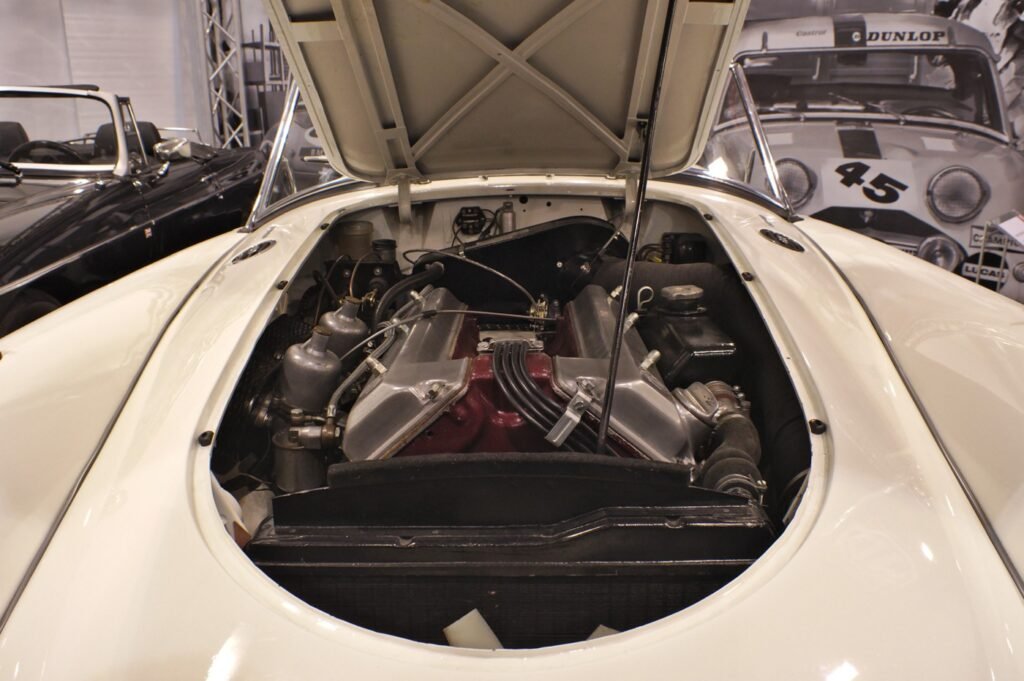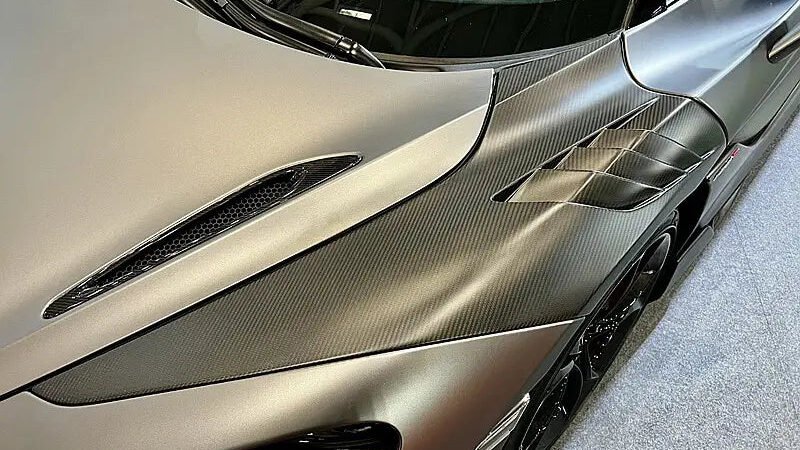
Carbon fiber fenders can transform a car’s stance and reduce panel weight, but they are also one of the easiest exterior upgrades to buy incorrectly. A product can match the model name and still miss the bumper line, headlight corner, door gap or wheel clearance. Fixing those problems after painting and installation can cost more than the fenders themselves.
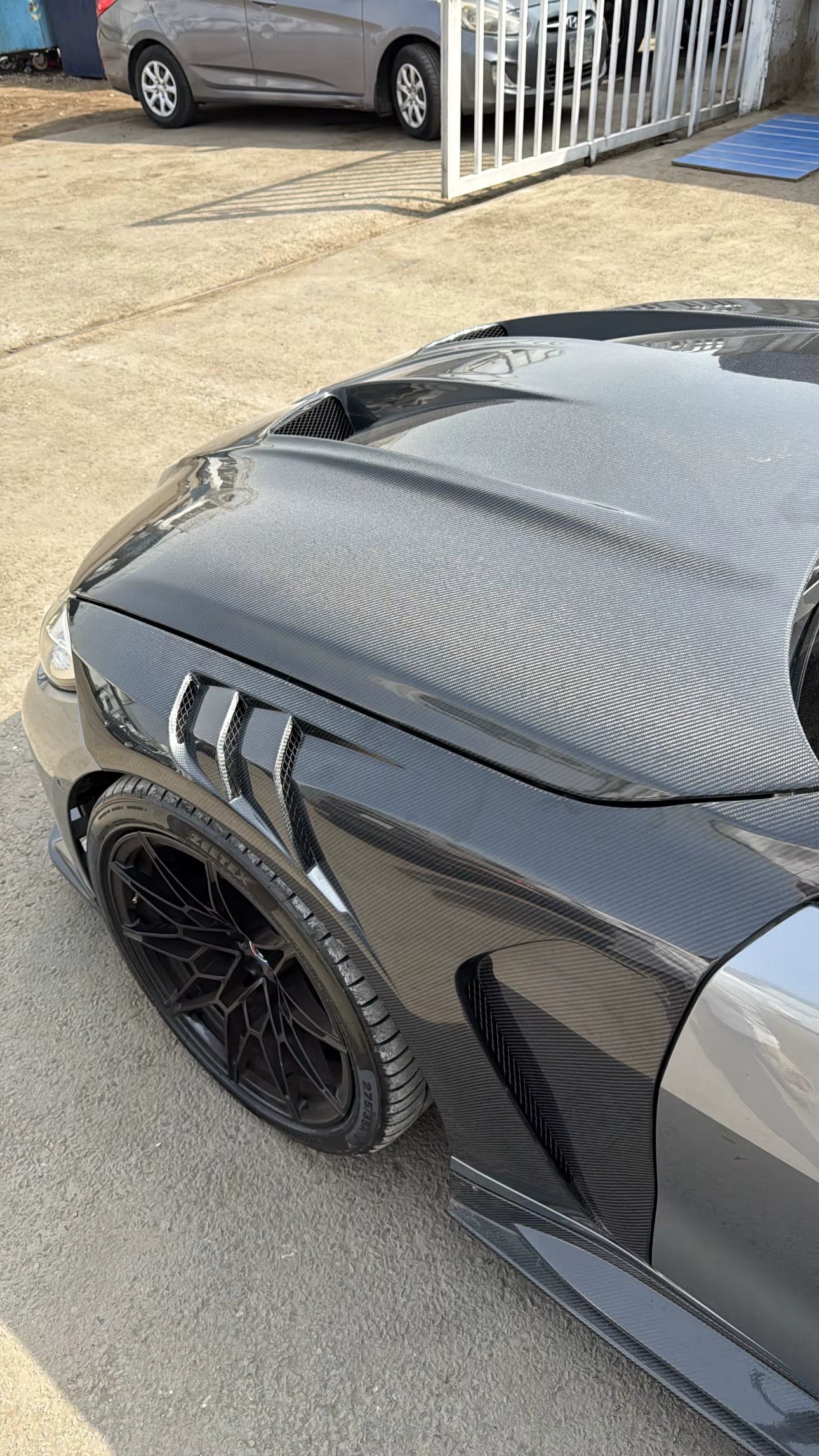
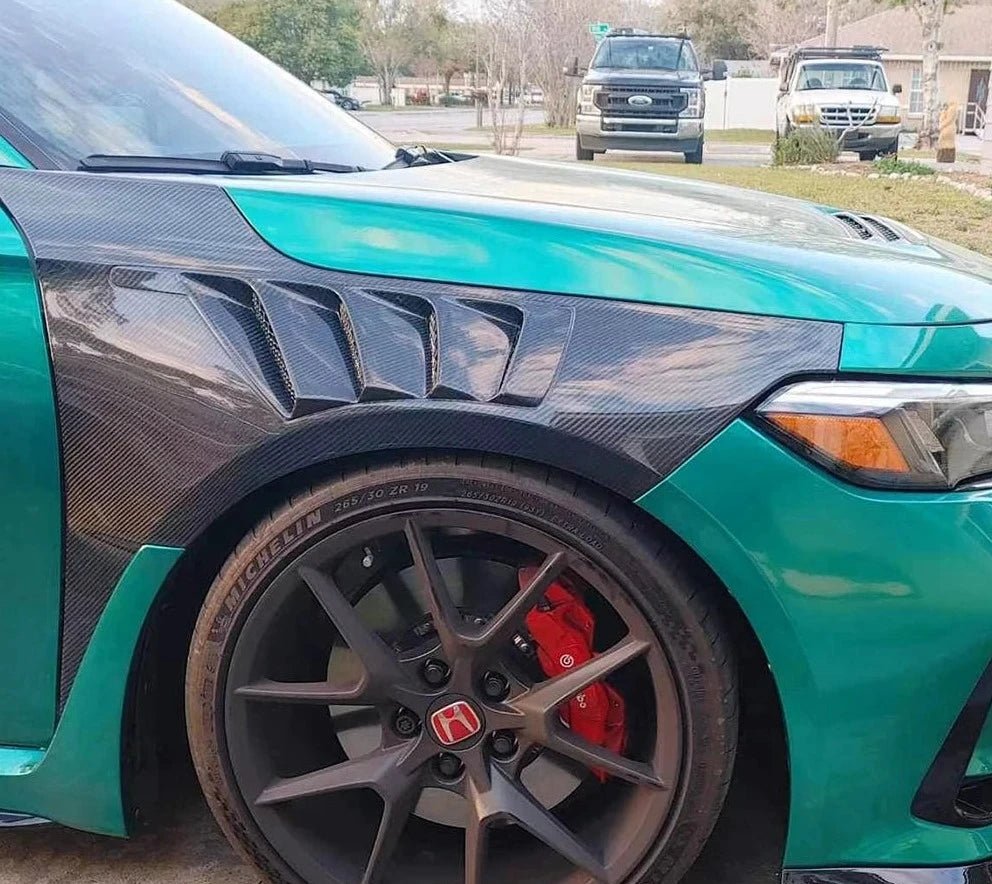
This guide shows the nine fitment traps to check before ordering. It uses six real installed-car photographs from the RevexaAuto catalog so you can see why vehicle generation, panel type, mounting points and wheel setup matter more than a perfect studio photo.
The 60-second answer
Buy only after confirming the exact chassis, body style, bumper, headlights, side-marker specification and wheel setup. Decide whether the listing is a full replacement fender, an add-on vent, a trim cover or a flare. Request photographs of the rear face and mounting points, dry-fit every edge before paint, and compare the complete installed cost rather than the part price.
First, identify what the seller means by “carbon fiber fenders”
The phrase covers several products that install differently. A replacement front fender removes the factory panel and must align with the hood, headlight, bumper, door and rocker. A fender vent replacement changes a smaller insert. A vent cover bonds over an existing area. A fender flare extends the wheel opening to add visual width or tire coverage.
Confirm what leaves the car and what stays. Ask whether the price is for a pair, a single side, or a set of smaller trims. A lightweight-looking add-on photographed from above should not be compared with a complete replacement panel.
Carbon fiber is not one single construction. Hexcel’s carbon reinforcement overview lists multiple fabric styles and weights. That variety is useful context for buyers: seeing a weave does not tell you the complete laminate, resin system, backing or reinforcement around mounting points.
9 carbon fiber fender fitment traps to avoid
1. Shopping by model name instead of chassis and body style
“Fits BMW M3” or “fits Civic” is not enough. Sedan, coupe and hatchback bodies can use different fenders. A facelift can change headlight and bumper interfaces within the same generation. Regional versions may also have different side markers or trim openings.
Send the model year, chassis code, body style and photographs of both front corners. If the car has an aftermarket bumper, hood or headlight, name those parts too. Each surrounding component changes the reference line the fender must meet.
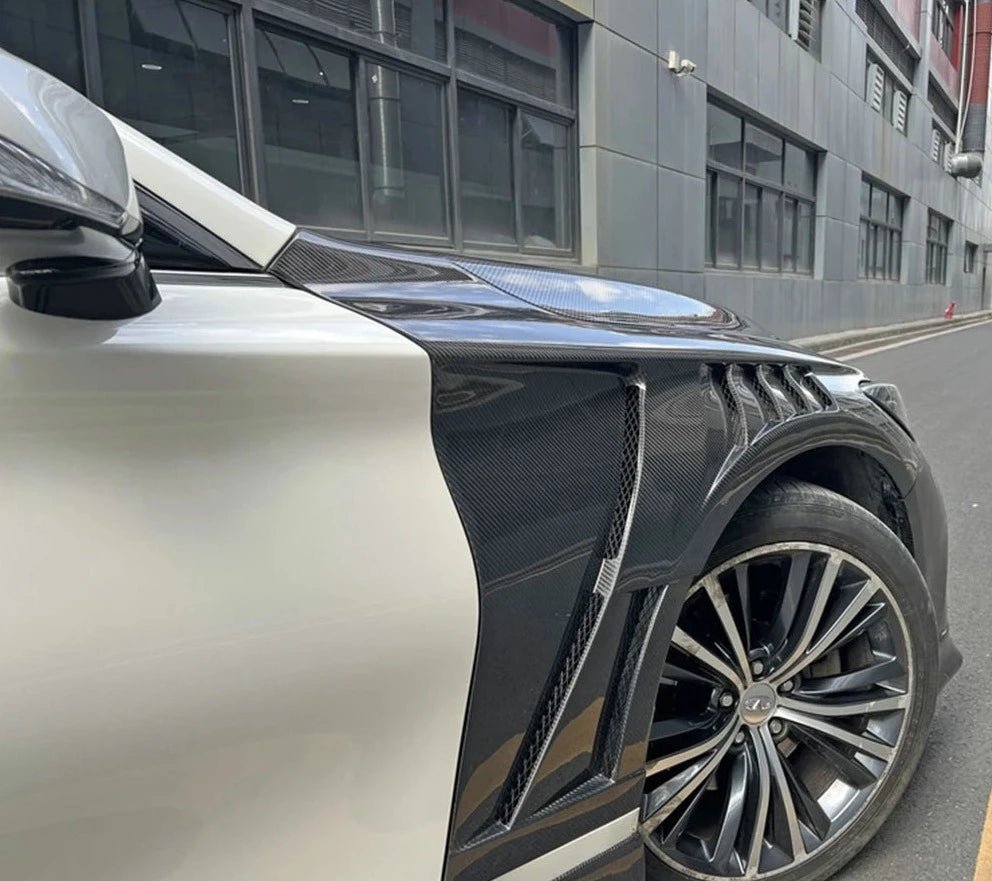
An installed Infiniti Q60 shows how many edges meet at one panel: hood, headlight, bumper, door and side skirt. A product photograph proves appearance on that example, but your own bumper and model year still need confirmation.
2. Confusing a replacement panel with a cover, vent or flare
A full replacement fender carries mounting tabs and establishes several visible gaps. A bonded trim or vent cover follows the factory panel beneath it. A flare changes the outer wheel-arch surface while leaving most of the original fender in place.
Ask for the uninstalled rear face. Count the mounting points and compare them with your original panel. If the listing never shows the back, you cannot judge whether it replaces the factory fender or only changes the visible surface.
Use the RevexaAuto hoods and fenders collection to narrow by application, then request confirmation for the exact product style.
3. Expecting factory panel gaps without dry fitting
Composite panels often need careful positioning before their final gaps are known. Check the hood-to-fender gap, door gap, headlight corner, bumper joint and rocker transition. Compare left and right at several points rather than judging one attractive angle.
Dry-fit both sides with the intended headlights, bumper and hood installed. Use temporary fasteners where the design allows, close the hood and doors slowly, and photograph every gap. Do this before drilling new holes, applying adhesive, sanding edges or adding paint and clear coat.
3M’s panel-bonding procedure includes pre-fitting, panel preparation and following OEM recommendations. It is a repair reference rather than a universal installation method for aftermarket carbon panels, but its order of operations reinforces the value of checking alignment before a permanent bond.
4. Ignoring the headlight, bumper and door interfaces
A fender is not an isolated skin. A small error near the headlight can force the bumper outward. An incorrect rear edge can contact the door as it opens. A vented design may also change how a factory liner, duct or bracket attaches behind the visible surface.
Ask whether the panel reuses the factory brackets and side marker. Request close photographs of the headlight corner, upper rail, A-pillar end and door edge. If the car has a widebody kit, confirm whether the fender is designed for that kit or the standard body.
Avoid solving alignment by tightening one point until the panel distorts. The installer should identify whether the mismatch comes from positioning, a surrounding aftermarket part or the fender itself.
5. Forgetting tire clearance, wheel offset and the fender liner
A vented or wider fender does not automatically create usable tire clearance. The wheel and tire still move through steering lock and suspension travel. The inner liner, mounting lip and vent duct can become the limiting points.
Provide wheel width, offset, tire size, alignment settings and suspension changes when clearance is part of the reason for buying. After installation, inspect clearance at full steering lock and through the expected suspension movement. Do not assume a photographed show-car setup is suitable for track loads or rough roads.

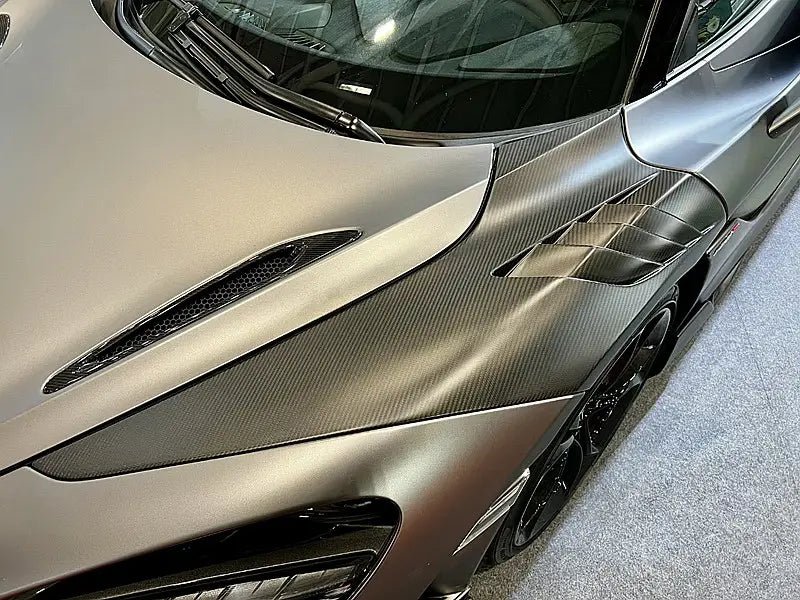
The Lamborghini example shows the visual relationship between vented fenders, hood and wheel opening. It does not establish clearance for a different wheel, tire or ride-height combination.
6. Treating every mounting point as cosmetic
Some fenders are primarily exterior closures, while surrounding brackets and vehicle structures can support lighting, liners or crash-related components. Do not cut, relocate or omit factory structure based only on a product image. Use the vehicle manufacturer’s service information and an installer experienced with the application.
Adhesive choice is also application-specific. 3M describes its panel bonding adhesive for specified non-structural panels and stresses OEM direction for structural use. That is why a generic instruction to “just glue it” is not an adequate installation plan for every replacement fender.
A manufacturer service document hosted by NHTSA also warns technicians about sharp and non-deburred panel edges. Inspect and finish exposed edges safely, while avoiding unauthorized changes to a load-bearing area.
7. Assuming “dry carbon” answers every material question
Terms such as prepreg, dry carbon, wet layup and carbon overlay describe materials or processes, but they do not tell you the finished weight, thickness, backing, cure quality or mounting reinforcement of a particular fender.
Toray’s carbon-fiber applications guide explains that carbon can be used in prepreg, sheet-molding compound and other formats. Ask the supplier which construction the actual panel uses, then request the finished panel weight and rear-face photographs.
Carbon composites can offer strong stiffness-to-weight performance when engineered for the job. Oak Ridge National Laboratory’s composites research also highlights the material’s production cost and manufacturing challenges. A lower price or a familiar weave does not remove the need to inspect the finished part.
8. Choosing weave and finish before checking the complete car
Gloss twill can look excellent beside a matching hood, but a different weave direction or clear-coat tone becomes obvious across adjacent panels. Decide whether the fenders should match an existing hood, mirror caps and front lip. Ask for photographs under daylight as well as workshop lighting.

A visible carbon panel may also be painted completely or partially. Decide this before ordering so the manufacturer and body shop can discuss the surface condition, pinholes, edge preparation and finish system. Do not assume exposed carbon requires no coating maintenance.
If you are comparing real carbon with a cosmetic pattern, read our real carbon fiber identification guide. For a wider material decision, see carbon fiber vs fiberglass car parts.
9. Comparing part price instead of complete installed cost
The invoice for the fenders is only one line. Add freight, protective packaging, import charges where applicable, body-shop dry fitting, bracket transfer, edge work, paint or clear coat, liner changes and alignment time.
Carbon fiber’s cost is a real manufacturing constraint. The U.S. Department of Energy’s Ford-Dow and ORNL project describes work toward lower-cost automotive-grade carbon fiber and high-volume component manufacturing. Buyers should be cautious when a complex replacement panel is priced like a simple cover without a clear explanation of its construction.
Ask the installer to quote the exact product before you buy it. Clarify who pays for additional work or return shipping if the panel does not match the verified application.
Replacement fender, vent cover or flare: quick comparison
| Product type | Main change | Key checks |
|---|---|---|
| Full replacement fender | Replaces the factory outer panel | All mounting points, panel gaps, liner, lighting and adjacent body parts |
| Replacement vent or insert | Changes a smaller factory component | Opening shape, clips, tabs, backing and airflow path |
| Bonded trim or vent cover | Adds a layer over the original surface | Contour, adhesive specification, edge thickness and reversibility |
| Fender flare or overfender | Extends the wheel opening outward | Coverage, fasteners, cutting requirements, wheel clearance and local rules |
How much do carbon fiber fenders cost to install?
There is no reliable universal installation price because a bonded vent cover and a pair of replacement front fenders are different jobs. Use one consistent formula:
Complete installed cost = part + freight + applicable import charges + dry fitting + required adjustments + finish work + installation + related liner or hardware work.
A useful quotation should state whether the shop will transfer original brackets, align surrounding panels, finish edges, paint or clear-coat the surface and correct minor fitment differences. Ask what happens if the panels cannot be aligned without substantial modification.
Frequently asked questions
Are carbon fiber fenders lighter than factory fenders?
They can be, but the result depends on the factory material and the actual carbon panel construction. Compare measured finished weights for the exact parts, including transferred brackets where relevant.
Do carbon fiber fenders always fit like OEM panels?
No. Fit varies by tooling, construction, vehicle tolerances and surrounding parts. Ask for application-specific evidence and plan a full dry fit before permanent finishing.
Can I install carbon fiber fenders myself?
A small trim may be straightforward with the correct instructions. A full replacement panel requires gap alignment, safe handling and knowledge of adjacent components. Use a qualified body shop when the job goes beyond a documented bolt-on procedure.
Will wider fenders stop tire rubbing?
Not necessarily. The outer skin may provide more visual coverage while the liner, chassis or mounting flange remains the clearance limit. Evaluate the complete wheel path and suspension movement.
Should I paint carbon fiber fenders?
That is a design choice. Full paint can create an OEM-style result; partial paint can retain an exposed-carbon detail. Agree on preparation and compatible coatings with the supplier and painter before work begins.
Send this fitment checklist before ordering
- Make, model, year, chassis code and body style
- Standard, sport, facelift or aftermarket front bumper
- Factory or aftermarket hood and headlights
- Left and right photographs of the current panel gaps
- Wheel width, offset, tire size and suspension changes
- Replacement fender, vent, cover or flare required
- Preferred weave and gloss, satin, matte or painted finish
- Delivery country and quantity
Request a carbon fiber fender fitment review, or browse vehicle-specific hoods and fenders. Send the full vehicle specification before paying so the first conversation addresses the gaps, mounting and wheel clearance that determine the finished result.