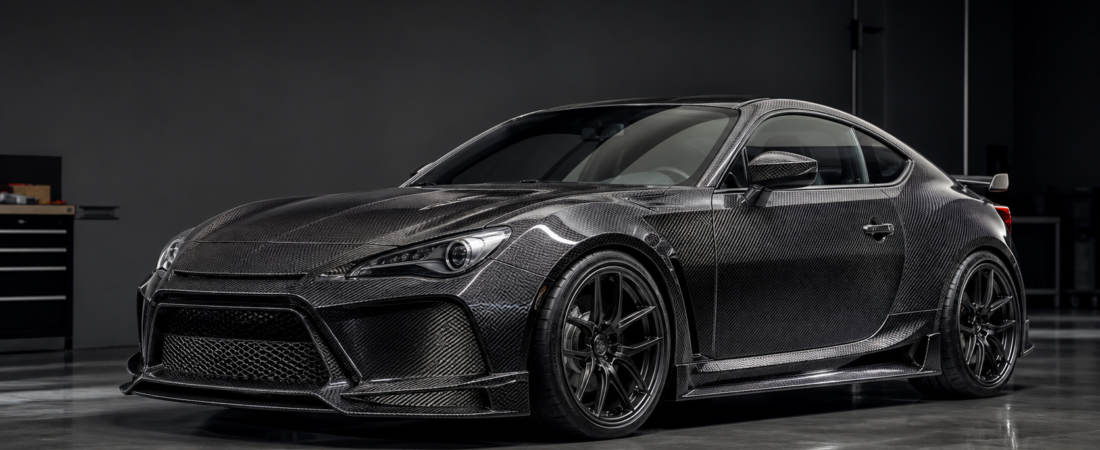
Carbon fiber body kits can give a vehicle a sharper silhouette, a more technical appearance and, in some applications, lower exterior-panel weight. But a carbon fiber body kit is not a single universal product. It may mean a complete exterior package, a group of bolt-on aero parts, or a collection of cosmetic replacement panels. Construction, fitment, finish and installation determine whether the kit is a satisfying upgrade or an expensive body-shop project.
Carbon fiber body kits: the quick answer
Choose a vehicle-specific kit with documented construction, accurate mounting points, a clear finish specification and installation evidence from the same vehicle generation. Confirm whether each part is a complete replacement panel, a carbon skin, an overlay or a bolt-on aero component. Always budget for test fitting and professional installation before paint or final clearcoat.
What is included in a carbon fiber body kit?
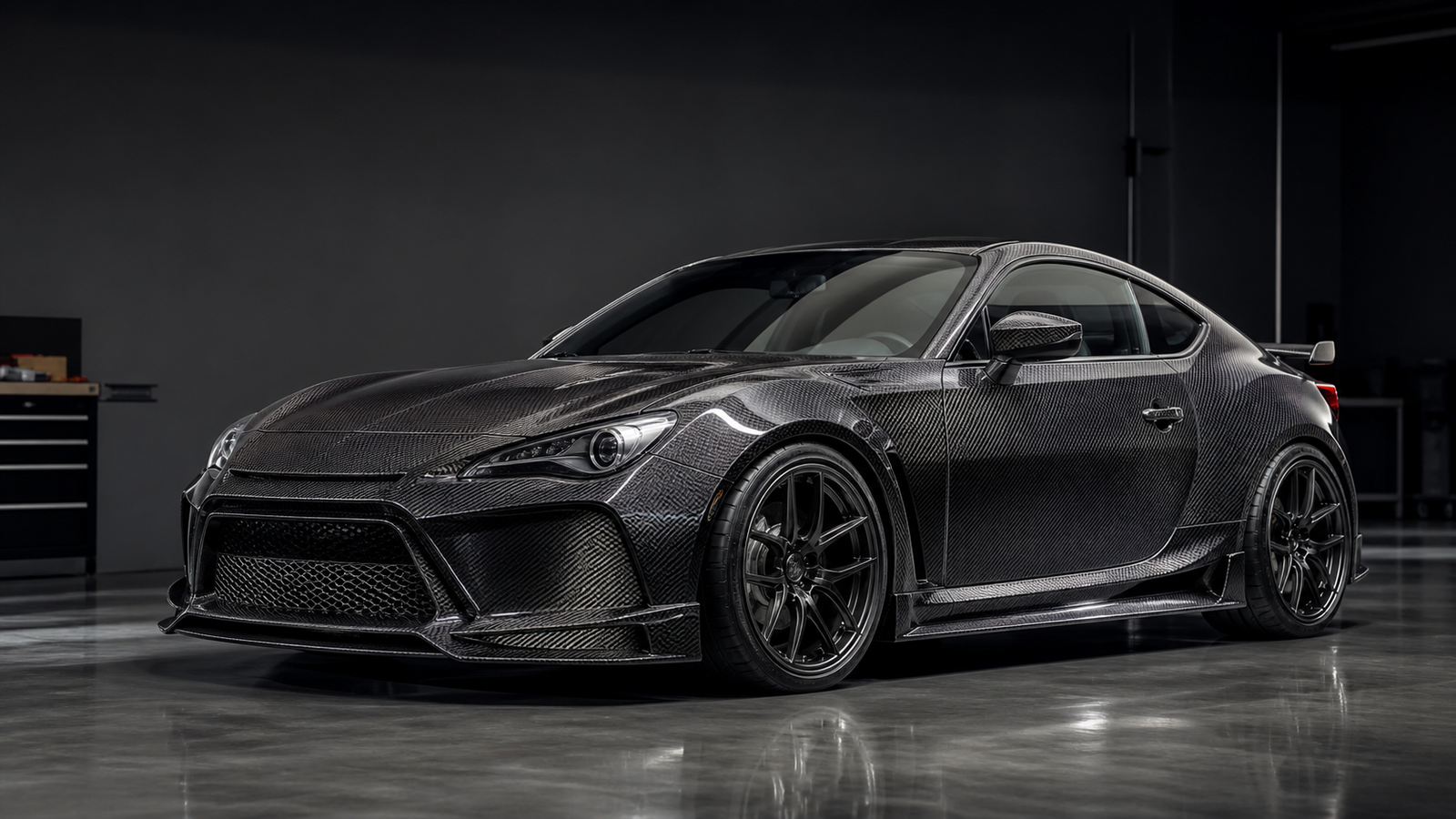
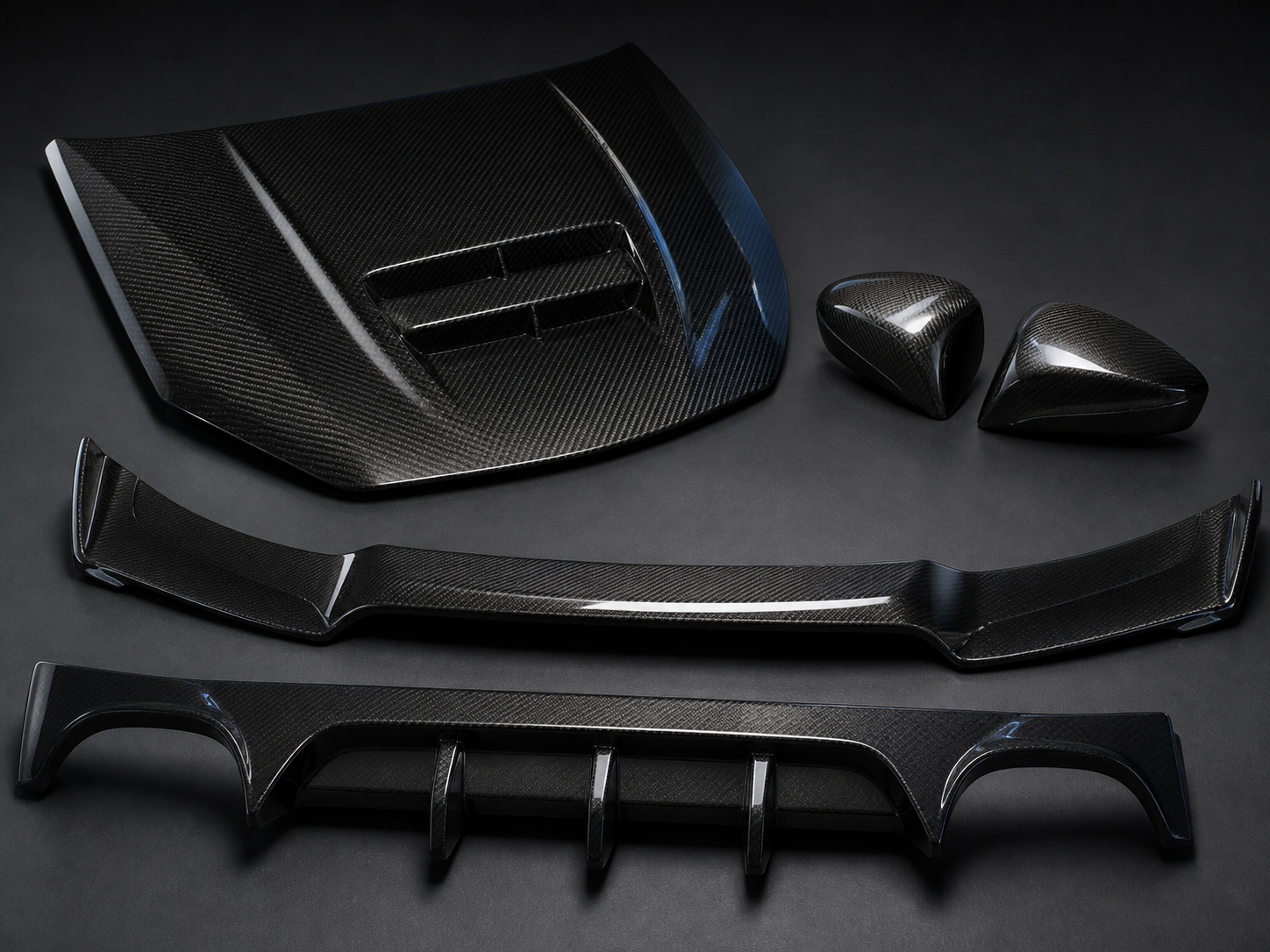
There is no fixed definition of a body kit. A basic package may include a front lip, side skirts and rear diffuser. A more extensive carbon fiber body kit for cars may add a hood, trunk lid, fenders, mirror caps, canards, a spoiler or a wide-body conversion. Some suppliers sell each part separately so buyers can create a staged build.
Before comparing prices, request a complete part list. Ask whether the quote includes grilles, mesh, brackets, fasteners, seals, templates, center sections and any trim that must be transferred from the original panel. A product photograph may show a complete vehicle even when the listing covers only one part.
Also clarify the construction of every component. “Carbon fiber” may describe a full carbon composite panel, a carbon outer skin over fiberglass, a carbon overlay bonded to an original part, or a cosmetic carbon-look surface. These choices affect weight, stiffness, durability, repair and price.
Common carbon fiber body kit construction types
| Construction | What it usually means | Best question to ask |
|---|---|---|
| Full carbon composite | Carbon reinforcement forms the outer skin and supporting structure, with mounting areas designed into the part. | What is the finished weight, inner structure and load-bearing reinforcement? |
| Carbon skin with composite frame | A visible carbon outer surface is combined with fiberglass or another composite on the underside. | Which areas are carbon and which areas provide the structural support? |
| Carbon overlay | A thin carbon layer is bonded to an original or composite base mainly for appearance. | Is this a cosmetic overlay, and what weight change should the buyer expect? |
| Pre-preg or controlled-cure part | Carbon fabric and resin are processed under controlled temperature and pressure for consistent laminate quality. | What process is used, and how are voids, edges and cosmetic surfaces inspected? |
| Painted carbon part | Carbon reinforcement is present, but the final surface is fully or partly covered with paint. | Does the price include preparation, primer and the requested paint or clearcoat? |
Fitment is the first buying filter
Even a beautiful carbon part can fail as an upgrade if it does not follow the vehicle’s body lines. Confirm the make, model, model year, generation, body style and market version before ordering. Facelifts, special editions and regional specifications can change headlights, bumpers, sensors, hood hinges, trunk lids and mounting points.
For front lips, splitters and side skirts, inspect the body curvature, ground clearance, wheel-arch transition and mounting surface. For a carbon fiber hood, confirm the latch, hinges, washer nozzles, insulation, gas struts and clearance around the engine bay. For a spoiler or wing, check the trunk contour, camera, antenna, hatch operation and reinforcement around the mounting points.
Send the supplier your current vehicle photographs, VIN or complete fitment data where appropriate. Modified vehicles should include brake, suspension, fender and wheel changes. Ask for installed photographs from the same generation rather than relying only on a studio photograph of the loose part.
How to judge carbon fiber quality
Inspect the visible surface
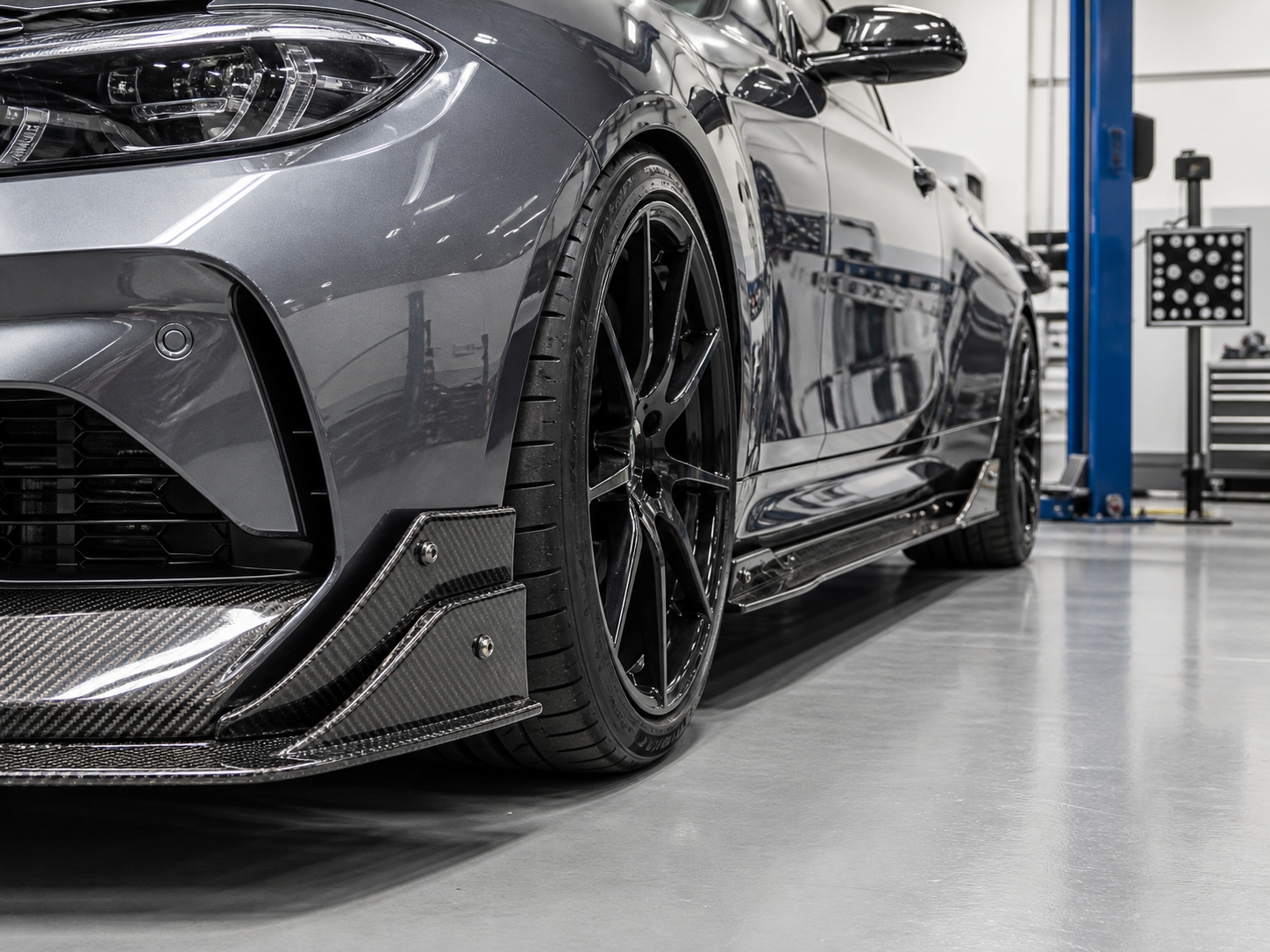
On exposed-weave parts, look for consistent fiber direction, clean transitions, even resin coverage, sealed edges and a clearcoat without cloudy areas, pinholes or excessive orange peel. A small amount of visual variation can occur across complex curves, but large weave distortion near a central feature deserves an explanation.
Inspect the underside
The underside often reveals more than the glossy top surface. Check whether the inner frame, brackets, ribs and bonding areas are clean and continuous. Hardware locations should be reinforced where the part transfers load. A thin cosmetic skin should not be marketed as a structural replacement without clearly stating its limits.
Inspect the edges and mounting points
Edges should be smooth, sealed and free from exposed fibers. Holes should be accurately positioned and free from cracking. Bonded studs, brackets and threaded inserts should sit square and show clean adhesion. Ask how replacement hardware is supplied if an insert is damaged during installation.
Manufacturing process and material questions
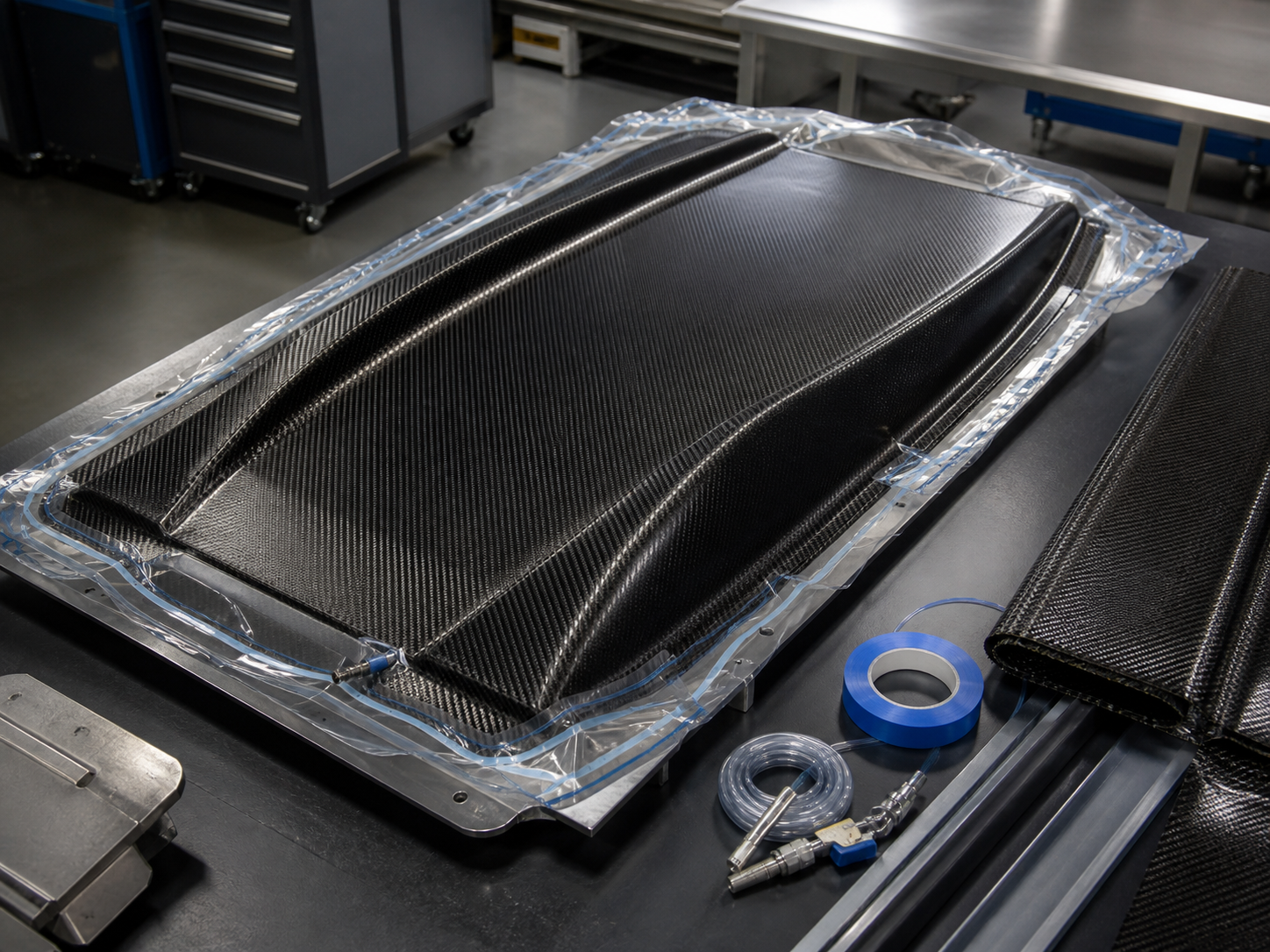
Manufacturing quality is a process, not just a finish. Ask what carbon fabric pattern is used, whether the part is wet layup or pre-preg, how it is cured, and how the supplier controls resin content and trapped air. For large panels, ask whether the part uses an inner frame, foam core or other reinforcement.
Do not assume that a visible twill pattern proves a complete carbon construction. A carbon outer layer can look excellent while the underlying structure is made from another composite. That may be perfectly suitable for a cosmetic part, but buyers need accurate information to compare weight, stiffness and price.
Finish options for carbon fiber car parts
Gloss clearcoat is popular because it increases contrast in the weave and is easy to photograph. Matte or satin clearcoat gives a quieter technical look and can coordinate with matte trim. Brushed, forged-carbon and painted-carbon treatments create different visual effects. If several carbon fiber car parts will be installed together, specify the weave pattern, direction, color tone and gloss level as one finish package.
Ask about UV protection and care requirements, especially for vehicles used outdoors. Carbon surfaces need a suitable protective clearcoat or coating system. Harsh chemicals, abrasive polishing and prolonged exposure to contamination can damage the surface. If a part will be painted, confirm whether the supplier delivers it ready for body-shop preparation or whether additional blocking and pinhole correction are expected.
Installation: what buyers should plan for
Professional installation is recommended for most carbon fiber body kits. The installer should dry fit every part, check the gaps and contact points, transfer or verify hardware, and test doors, hoods, trunks, sensors and wheels before final finishing. Do not paint a kit before confirming that the raw parts fit the vehicle.
Some parts use factory holes; others require drilling, bonding, rivnuts or additional reinforcement. A front splitter may need support rods or a rigid mounting surface. A large wing can transfer meaningful load into the trunk or body structure. Follow the product instructions and use an experienced workshop when the installation changes safety-relevant mounting or visibility systems.
Allow time for adjustment. Small corrections may be normal on low-volume custom carbon fiber body panels, but major gaps, twisted edges or missing mounting points should be resolved with the supplier before irreversible work begins.
How much do carbon fiber body kits cost?
The cost of carbon fiber body kits depends on the number of parts, vehicle tooling, construction method, panel size, vent or aero complexity, finish, hardware, packaging and shipping. A complete kit for a common performance model may have established tooling, while a custom kit for a low-volume vehicle may require new scanning, molds and test fitting.
Compare total project cost instead of the headline product price. Include freight, oversized packaging, duties, paint or clearcoat, installation, replacement clips, reinforcement and possible test-fit labor. Ask for a written quote that separates the parts, finish, hardware, lead time and delivery terms.
Carbon fiber body kits vs fiberglass kits
Carbon fiber is often selected for lower mass potential, stiffness, exposed appearance and premium positioning. Fiberglass can be more economical, easier to paint and familiar to many body shops. Neither material automatically guarantees better fitment. Tooling accuracy, design, reinforcement, curing and quality control still determine the result.
If the final vehicle will be fully painted and regularly driven near curbs or rough roads, fiberglass may be a practical choice for some large body-kit sections. If visible weave, reduced mass or a custom lightweight specification is central to the build, carbon fiber may justify the higher investment. Our carbon fiber vs fiberglass comparison explains the trade-offs in more detail.
Supplier checklist before ordering
- Confirm the exact vehicle generation, body style and market specification.
- Request the full part list and identify what is included in the kit price.
- Ask whether every part is full carbon, skin-and-frame, overlay or mixed composite.
- Request finished weight, dimensions, mounting details and any load or road-use limits.
- Review installed photographs or fitment references for the same vehicle version.
- Confirm weave pattern, clearcoat, paint, UV protection and finish matching.
- Clarify templates, hardware, seals, brackets, reinforcement and installation requirements.
- Confirm lead time, packing method, shipping terms, warranty and replacement support.
Final decision: buy the complete specification
A high-quality carbon fiber body kit should combine accurate fitment, honest construction details, clean mounting areas and a finish suited to the vehicle’s use. The right kit is not necessarily the lightest or most expensive one. It is the kit whose parts, process, installation plan and after-sales support match the project.
For related component decisions, see our carbon fiber hood buying guide and spoiler vs wing guide. To discuss custom carbon fiber car parts, send RevexaAuto your vehicle details, target parts, finish and delivery country before ordering.