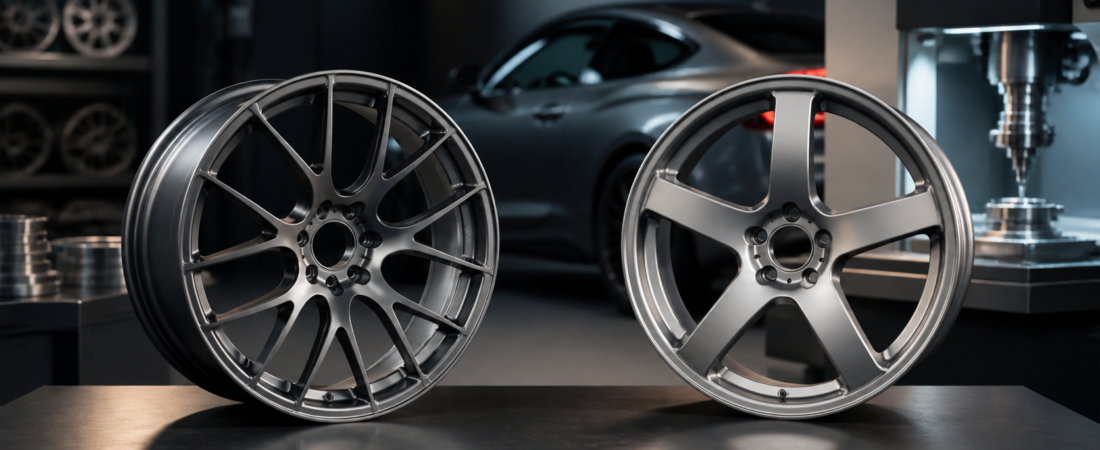
When comparing forged vs cast wheels, buyers are usually trying to answer three practical questions: which wheel is lighter, which is stronger and whether the price difference is justified. The short answer is that a well-engineered forged wheel can deliver a better stiffness-to-weight result and a premium custom specification, while a cast wheel can provide reliable everyday service at a lower purchase price. The best choice depends on your vehicle, driving conditions, target fitment and budget.
Forged vs cast wheels: the quick answer
Choose forged wheels when low mass, stiffness, custom sizing or a high-end finish are important to the project. Choose cast wheels when initial cost, broad availability and straightforward replacement matter more. In both cases, the exact design, load rating, dimensions, manufacturing controls and fitment are more important than the material label alone.
What is the difference between forged and cast wheels?
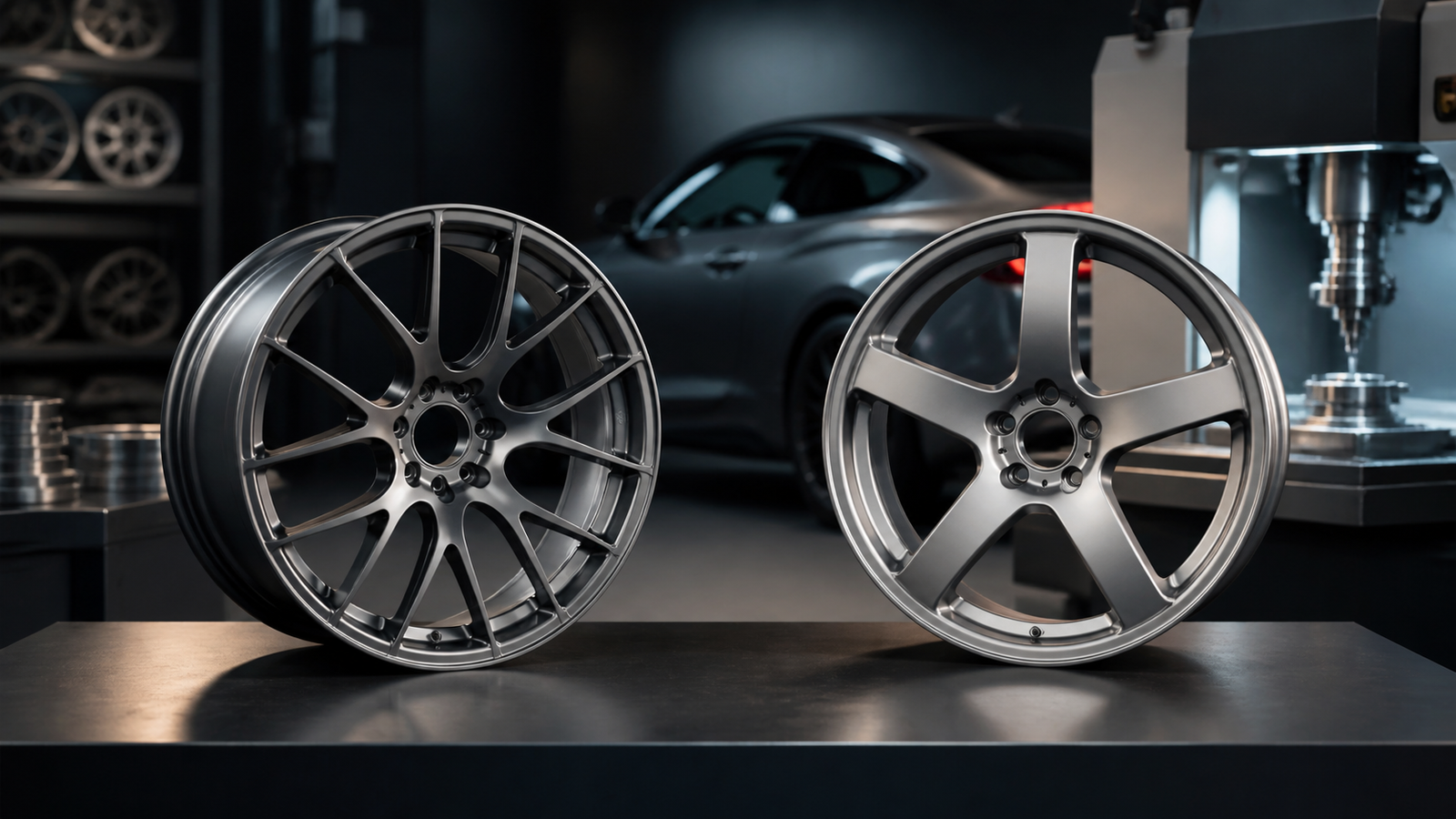
A cast wheel is made by pouring molten aluminum into a mold and allowing it to solidify into the wheel shape. The blank is then heat-treated, machined, finished and inspected. Casting makes it practical to produce many designs and sizes at a comparatively accessible cost.
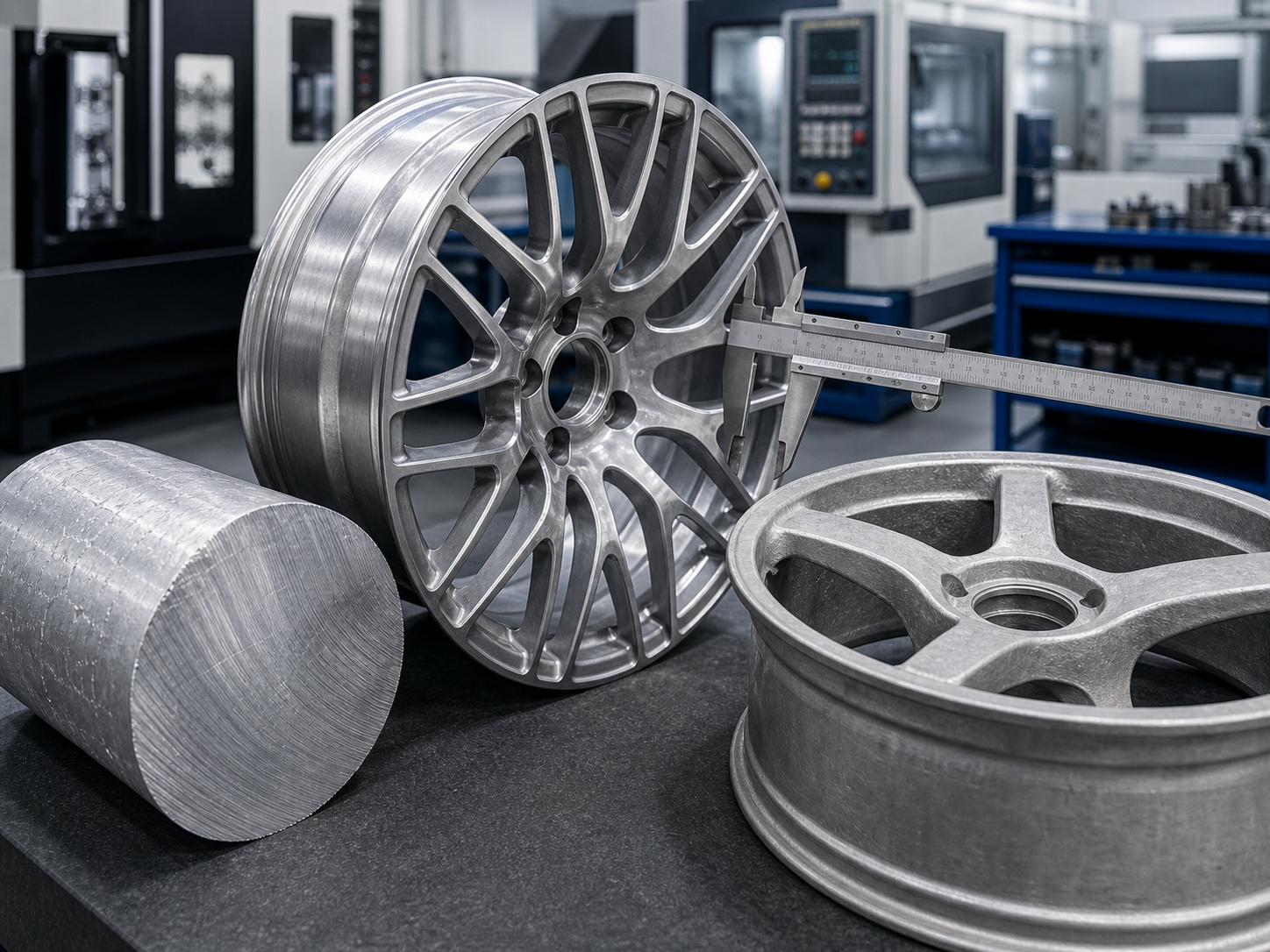
A forged wheel starts with a solid aluminum billet or forging blank. Controlled pressure shapes the material before the wheel is machined to its final profile. The forming process can align the material structure and allow the designer to remove material from low-stress areas while retaining strength where loads are higher. The finished result still depends on the alloy, forging route, heat treatment, machining, testing and design.
This distinction is why the phrase “forged” should not be treated as a complete quality guarantee. A forged wheel with poor machining, inadequate testing or incorrect fitment is not a safe upgrade. A properly designed cast wheel may be the correct solution for a different application.
Forged vs cast wheels at a glance
| Factor | Forged wheels | Cast wheels |
|---|---|---|
| Manufacturing route | Pressure-formed from a billet or forging blank, then CNC machined | Molten aluminum poured into a mold, then heat-treated and machined |
| Weight potential | High stiffness-to-weight potential when engineered correctly | Often heavier for comparable size and load requirement |
| Custom fitment | Well suited to custom width, offset, center bore and brake clearance | Usually offered in standardized sizes and offsets |
| Price | Higher due to material, tooling, machining and inspection | Generally lower and easier to source |
| Finish options | Premium exposed, brushed, polished, painted or multi-step finishes | Broad finish range, often optimized for volume production |
| Repair considerations | Damage assessment may require a specialist, especially for structural cracks | Replacement is often more economical; damage still requires inspection |
Are forged wheels lighter than cast wheels?
Often, but not automatically. Forging gives the wheel designer more freedom to target stiffness and remove unnecessary material. A lightweight forged wheel can reduce unsprung and rotational mass, which may help steering response, ride control and acceleration. The actual saving varies with wheel diameter, width, spoke design, brake clearance, load rating and finish.
Do not compare a bare forged wheel with a cast wheel that includes valves, sensors or other hardware. Ask for the finished weight of the exact size and specification you are ordering. If the wheel is intended for a performance or competition application, also confirm the required load rating and test standard. A lighter wheel is valuable only when it remains appropriate for the vehicle and use case.
Strength, stiffness and impact behavior
One reason drivers consider forged wheels is their potential for high stiffness at lower mass. A stiff wheel can help maintain its shape under cornering, braking and road loads. Forged construction may also allow a strong spoke and barrel design without adding as much material as a comparable cast design.
That does not mean a forged wheel is indestructible. Severe pothole impacts, curbs, overloading or incorrect tire pressure can damage any wheel. Forged aluminum can bend or crack, and internal damage may not be obvious from a quick visual check. After a hard impact, inspect the wheel, tire and suspension before continuing to drive.
Cast wheels can also be strong enough for normal road use when their design and load rating match the vehicle. Their lower price does not make them automatically unsafe. The meaningful comparison is between two verified products with the correct dimensions, load rating and quality-control records.
Why forged wheels cost more
The price difference between forged and cast wheels comes from more than the word on the product page. A custom forged wheel may require billet material, dedicated tooling, engineering time, multi-axis CNC machining, heat treatment, finishing and more extensive inspection. Low-volume custom orders also spread development and setup costs across fewer units.
When comparing a quote, check the complete landed cost rather than the wheel price alone. Confirm whether the quote includes the finish, center caps, valve stems, TPMS compatibility, packaging, shipping, duties and any required hardware. A low initial quote may not be the lowest project cost if the wheel requires extensive correction or does not fit without expensive changes.
Custom forged wheels and fitment
Custom forged wheels are attractive because they can be specified around the vehicle instead of forcing the vehicle into a generic size. A proper fitment review should cover diameter, width, bolt pattern or PCD, offset or ET, center bore, brake clearance, tire size and suspension clearance.
Provide the supplier with the exact make, model, year, generation and body style. Modified vehicles should also include brake specifications, suspension changes, fender modifications and current tire information. If possible, send a wheel drawing, hub measurement or the vehicle’s verified fitment data. Small changes between generations can affect the hub, caliper clearance or fender position.
Review our monoblock wheels, two-piece wheels and three-piece wheels collections for construction options. If your application is unusual, a direct fitment discussion is more reliable than selecting from a photograph alone.
Finish and appearance: forged does not mean one specific look
Both forged and cast wheels can be painted, powder coated, machined, brushed, polished or finished in two-tone combinations. Forged wheels are frequently selected for exposed machined surfaces and highly customized designs, but a premium finish depends on preparation and process control.
Ask how the surface is prepared, what clearcoat or protective layer is used and whether the finish is suitable for your climate. If the vehicle already has carbon fiber, chrome or painted exterior parts, request finish samples or installed references. Color, gloss and machining direction can look different under sunlight than in a studio photograph.
Repair, maintenance and long-term ownership
Cast wheels are commonly replaced because their purchase price is lower and replacement availability is usually better. Some damage can be repaired, but every repair should be assessed by a qualified wheel specialist. Do not continue driving on a wheel with a visible crack, air loss or severe bend.
Forged wheels can also be repaired in some cases, but structural damage and exposed finishes require specialist evaluation. A cosmetic repair is not the same as restoring the wheel’s structural integrity. Ask the manufacturer whether repair is supported and how replacement parts, finish matching and inspection are handled.
For either construction, keep the wheels clean with automotive-safe products, avoid harsh acids and inspect the bead seat, spokes and mounting holes during routine service. Use the correct torque procedure and recheck fasteners after installation according to the wheel and vehicle instructions.
Which should you choose for your build?
Choose forged wheels when:
- You want a lower-mass wheel with a strong stiffness-to-weight target.
- Your vehicle needs custom width, offset, PCD or brake clearance.
- You are building a premium road, show or performance vehicle.
- You value low-volume design work and a tailored finish.
- The budget supports engineering, inspection and professional fitment.
Choose cast wheels when:
- Purchase price and broad replacement availability are top priorities.
- The vehicle uses a common size and a standard fitment is suitable.
- You want a practical daily-driver upgrade with predictable sourcing.
- The project budget is better allocated to tires, brakes or suspension.
Questions to ask a wheel supplier
- What alloy and manufacturing process are used for this exact wheel?
- What is the verified finished weight, including the selected size and finish?
- What are the load rating, test standard and inspection procedures?
- Will the wheel clear the factory or upgraded brake caliper?
- Does the center bore require a hub-centric ring, or is it machined to order?
- Are TPMS, valve stems, center caps and mounting hardware compatible?
- What warranty, repair support and replacement policy apply?
- Can you provide a drawing or installed photographs for the same vehicle?
Final verdict: compare the complete specification
The right answer to “forged vs cast wheels” depends on what the project needs. Forged wheels can offer a compelling combination of lower mass, stiffness, custom fitment and premium finishing, while cast wheels remain a sensible choice for standardized road applications and cost-conscious builds.
Compare verified weight, load rating, dimensions, brake clearance, manufacturing details and total installed cost. If you are sourcing custom forged wheels for a vehicle, request a fitment review from RevexaAuto with your vehicle details, target size, PCD, offset, finish and delivery country.