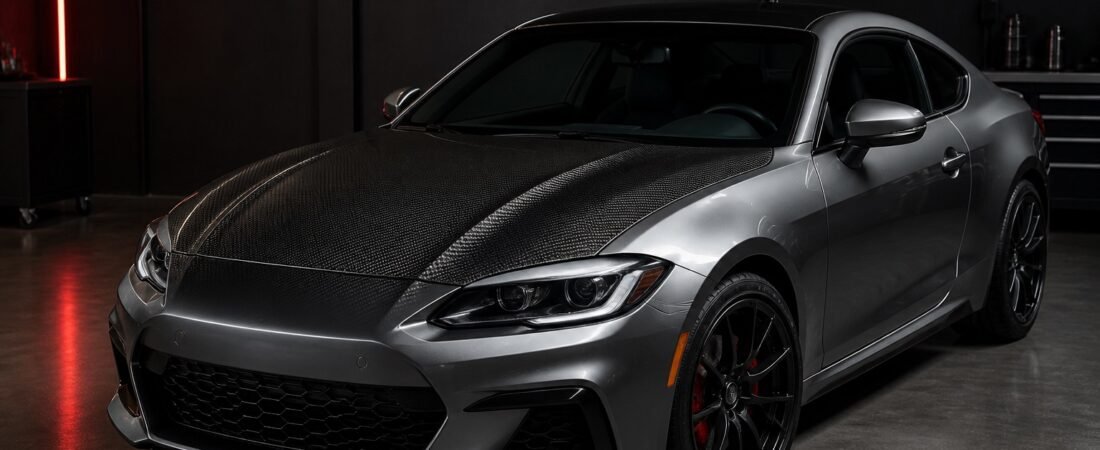
A carbon fiber hood can change a car’s appearance, reduce weight at the front of the vehicle and create space for functional venting. But the material name alone does not tell you whether a hood will fit correctly, survive daily use or deliver a meaningful improvement. Construction, inner-frame design, mounting points, clearcoat and installation all matter.
Carbon fiber hood: the quick answer
Choose a vehicle-specific hood with documented construction, a complete inner frame, compatible latch and washer provisions, consistent panel gaps and a UV-resistant finish. Ask for the actual part weight and installation requirements instead of assuming every carbon hood provides the same weight saving.

What is a carbon fiber hood?
A carbon fiber hood, also called a carbon fiber bonnet in some markets, is an exterior body panel made with carbon-fiber reinforcement and resin. The visible weave may be part of the structural laminate, a cosmetic outer layer over another composite, or a carbon skin bonded to a supporting frame. These products can look similar in photographs while differing substantially in weight, rigidity, underside finish and mounting method.
That distinction matters when comparing a full replacement hood with a carbon-look wrap or an original hood covered by a thin cosmetic layer. A wrap changes appearance only. A replacement panel changes the physical part and must be evaluated for fitment, latching, heat management and road use.
Main carbon hood construction types
| Construction | Typical characteristics | Questions to ask |
|---|---|---|
| Full carbon composite | Carbon reinforcement across the outer skin and supporting structure; intended as a complete replacement panel. | What is the verified weight, cure process, inner-frame design and latch reinforcement? |
| Carbon outer skin with composite frame | Visible carbon surface combined with a fiberglass or mixed-composite underside. | Which areas are carbon, what supports the latch, and how is the skin bonded? |
| Dry/pre-preg carbon | Pre-impregnated material cured under controlled heat and pressure; often selected for tighter resin control. | Is the entire hood pre-preg, and what finish and UV protection are applied? |
| Wet-lay carbon | Carbon fabric laminated with liquid resin; quality depends heavily on process control. | How are voids controlled, and what are the finished weight and surface tolerances? |
| Cosmetic carbon overlay | A thin carbon layer over a base panel, usually chosen primarily for appearance. | What is the substrate, and should the product be treated as a styling part rather than a lightweight panel? |
Benefits buyers usually expect
Potential front-end weight reduction
Replacing a heavy factory panel can reduce mass, but the amount depends on the original hood and the replacement design. A reinforced street hood with an inner frame may weigh more than a thin competition panel, yet it may be more practical for regular use. Request the measured product weight and compare it with the exact original part rather than relying on a generic percentage.
Distinctive finish
Exposed weave gives a carbon fiber car hood its recognizable appearance. Common choices include gloss or matte clearcoat, traditional twill weave and forged-carbon texture. If other carbon parts are already installed, compare weave direction, color tone and clearcoat sheen before ordering.
Functional vent options
Vented hoods may support heat extraction or airflow management when their openings, ducting and under-hood pressure zones are designed for the specific vehicle. A dramatic opening is not automatically functional. Confirm water management, screen design, engine-bay clearance and whether additional ducting is required.
Carbon fiber hood fitment checklist
Fitment is the most important buying filter. Send the supplier the full vehicle specification and verify each of the following before payment:
- Make, model, model year and generation: small facelift changes can alter headlights, bumpers, hinges or hood contours.
- Body style and market: coupe, sedan, wagon and regional versions may use different hardware.
- Factory latch: confirm whether the original latch transfers and whether the latch area is reinforced.
- Hinges and gas struts: check whether original hinges are retained and whether strong factory struts could stress a lighter panel.
- Washer nozzles, insulation and seals: ask which factory items transfer and whether holes are pre-drilled.
- Engine-bay clearance: verify clearance around intake systems, braces, covers and aftermarket components.
- Panel gaps: request installed photographs from the same vehicle generation, not only studio images of the loose part.
Browse RevexaAuto’s hoods and fenders collection to compare vehicle-specific options, then send your VIN or complete vehicle details for confirmation.
How much does a carbon fiber hood cost?
The search terms “how much is a carbon fiber hood” and “carbon fiber car hood price” have no single correct answer. Price changes with panel size, tooling, construction method, vent complexity, surface finish, quality-control requirements, packaging and international freight. Vehicle-specific low-volume designs generally cost more than simple high-volume patterns.
A useful quote should state what is included: hood, vents or mesh, mounting hardware, finish, packaging, production lead time and shipping terms. A low product price can be misleading if the crate, oversized freight, duties or installation preparation are omitted.
Quality details to inspect before ordering
- Surface consistency: inspect the weave for distortion, dry spots, pinholes, cloudy areas and resin pooling.
- Edges and corners: finished edges should be smooth, sealed and free of exposed fibers.
- Underside structure: look for a complete frame, clean bonding and reinforced hardware locations.
- Clearcoat: confirm UV resistance, gloss level and whether final polishing is included.
- Installed evidence: request photographs showing hood-to-fender, hood-to-bumper and hood-to-headlight gaps.
- Packing: oversized carbon panels need rigid edge protection and a shipping method appropriate to the destination.
Installation and road-use considerations
Professional installation is recommended. Even a well-made hood may need alignment at the hinges, bump stops and latch. Do not force a panel into place or enlarge mounting holes before confirming the cause of a mismatch. The installer should check latch engagement, clearance, fastener torque and the effect of air pressure at speed.
Some applications or motorsport rules may require hood pins or secondary restraints. Local road regulations also vary. Follow the hood manufacturer’s instructions, the vehicle service information and the requirements that apply where the car is driven.
Care and maintenance
Wash the hood with automotive-safe products and a clean microfiber towel. Avoid harsh abrasives and prolonged contamination from bird droppings, chemicals or tree sap. Use paint-protection products compatible with the clearcoat, and inspect vents, fasteners and seals during routine maintenance. If the surface becomes cloudy or damaged, ask a composite or paint specialist to identify whether the issue is in the clearcoat or the laminate before sanding.
Frequently asked questions
Are carbon fiber hoods lighter than factory hoods?
Many are, but not every product is lighter than every factory hood. Compare verified weights for the exact application, including any transferred hardware.
Do I need hood pins?
That depends on the hood design, manufacturer instructions, intended use and local rules. A professional installer should inspect the primary latch and determine whether a secondary restraint is required.
Can a vented carbon hood be used in rain?
Some designs include drainage paths, removable covers or protected vent positions; others expose engine-bay components. Ask how water is managed on the exact hood and vehicle.
Can I paint a carbon fiber hood?
Usually yes when the surface is prepared with a compatible system. Some owners paint the entire panel; others leave selected exposed-carbon sections. Confirm the finish with the supplier and painter first.
Is a carbon fiber hood suitable for a daily driver?
It can be when the panel has appropriate structure, finish, weather protection and secure mounting. Choose a street-oriented design rather than assuming a thin competition panel offers the same durability.
Choose the hood by specification, not appearance alone
A good carbon fiber hood combines accurate vehicle fitment, appropriate construction, reinforced hardware points and a durable finish. Start with the exact vehicle, ask for installed evidence and compare complete landed cost. For a broader overview, read how to choose carbon fiber car parts, or request a fitment review with your model year, body style, preferred design and delivery country.